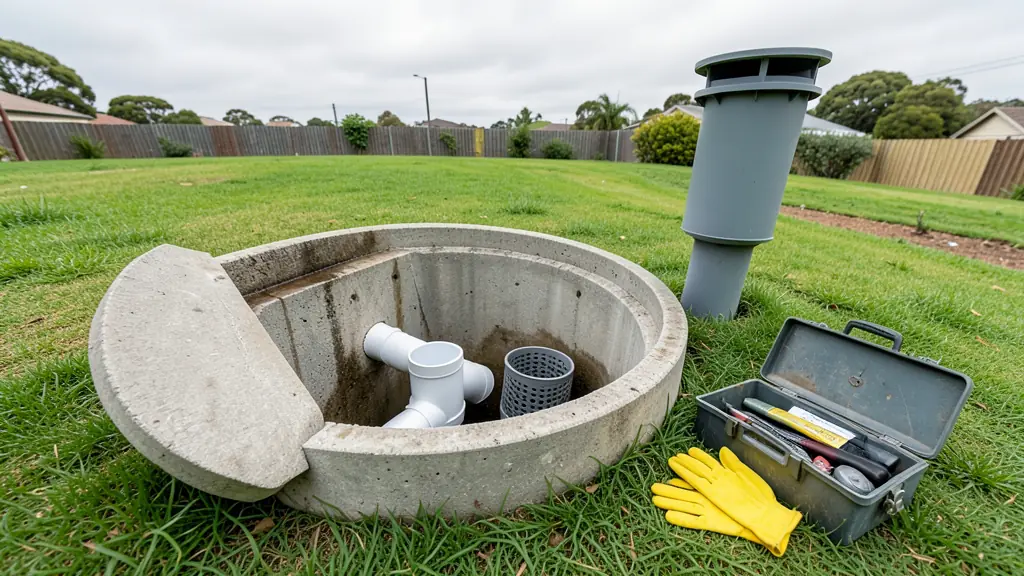
Most septic and sewage problems show the same few signs: drains that run slowly, gurgling, smells and wet ground. What matters is the combination, because a slow drain with a wet soakaway points somewhere different from a slow drain after a pump-out. This checker scores ten common causes from what you tick, ranks them, and tells you how urgent each is and who to ask for. It is a first guide from symptoms, not a diagnosis; an operator who opens the tank and runs a camera down the pipe has the final word.
How the ranking works
Each tick adds points to the causes it usually goes with. Wet ground over the soakaway counts heavily towards a failed or saturated soakaway, gurgling towards a blocked vent or house drain, and an alarm towards a treatment plant fault. Your system type switches causes on and off: a sealed conservancy tank has no soakaway, and a septic tank has no blower. A recent pump-out lowers the score for a full tank and raises it for a blocked tee or house drain.
The cause with the most points is shown as the main result, with up to four others underneath. Several close scores mean the symptoms do not separate the causes, and an inspection is the quickest way to find out which one it is.
Symptoms and what they usually mean
| Symptom | Usual causes | First step |
|---|---|---|
| Slow drains in the whole house | Full tank, blocked tee, blocked house drain | Cut water use, then book a pump-out or rodding |
| Gurgling | Blocked vent, blocked drain, full tank | Check the vent cowl, then call an operator |
| Smell inside | Dry trap, blocked vent, backing-up drain | Run water in unused basins and call if it stays |
| Smell outside | Full tank, failed soakaway, broken lid seal | Check the lid and book an inspection |
| Wet green patch over the soakaway | Saturated or failed soakaway, high water table | Rest the system and keep people and pets off |
| Sewage at the lowest drain | Blocked drain or tee, full or high-level tank | Stop using water and call the same day |
| Plant alarm | Blower, pump or power fault | Check power and breaker, then call the service provider |
Treat sewage on the surface as urgent. It carries disease and the water it comes from will not stop by itself.
What to do now, and what not to do
- Use less water. Spread washing over the week, skip long baths and fix running toilets and dripping taps, so the tank and soakaway can catch up.
- Keep children and pets away from wet ground, standing sewage and the area around the tank.
- Never go into a tank or sump. The gas can kill within minutes, and most deaths happen to people trying to help. Leave lids closed and let a trained operator open them.
- Do not pour in chemicals. Caustic and acid "cleaners" and strong bleach kill the bacteria and can harm the soakaway. See the safe products guide for what goes in and what does not.
- Do not wait out an alarm or sewage at the surface. Both are urgent.
Which service to ask for
A pump-out fixes a full tank and clears many blocked tees. If water is standing in the pipes between house and tank, you need drain unblocking instead, because pumping the tank will not clear that pipe. Wet ground, smell and a recently pumped tank point to the soakaway, so ask for septic tank drainage work or an inspection. A sealed tank at high level needs conservancy tank emptying, and a plant alarm goes to a treatment plant technician. When you are not sure, a septic tank service with an inspection finds the cause before you pay for the wrong job. To judge whether pumping is overdue, use the pump-out frequency calculator.