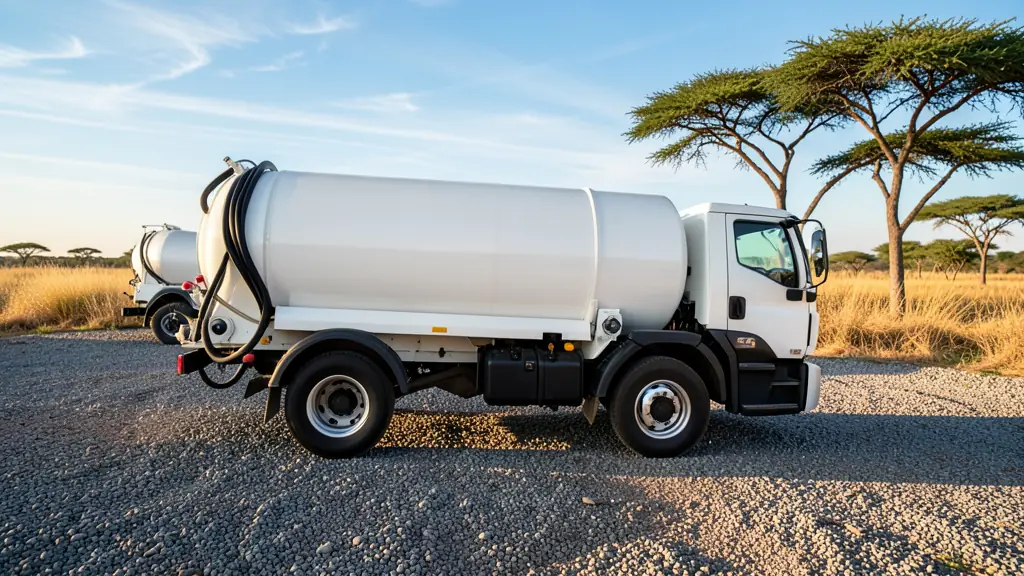
Buying a honey sucker truck is a big step for a new operator, a growing septic business, a municipality or a mine. Vacuum tankers range from small tippers to large rigs, new from a body builder or used from another fleet. Tell us the capacity, budget and region, and truck suppliers and tanker builders will send quotes, with photos and specifications, directly to you. We do not sell trucks ourselves, so the quote you get is from a dealer or builder who can talk you through the machine, the paperwork and the delivery.
Tank sizes and what they suit
Tanks run from about 4 kL to 18 kL. The size you choose should match your work:
- 4 to 6 kL: narrow lanes, town houses and small plots.
- 8 to 10 kL: the all-round size for houses, farms and light commercial.
- 12 to 18 kL: estates, mines and long hauls to disposal sites, where fewer trips matter.
Remember axle load limits. A big tank on a light chassis can be overloaded legally before it is full. Liquid also surges inside a half-empty tank, so baffles matter for braking on steep roads.
Vacuum pumps and chassis
Most trucks use either a rotary vane pump or a liquid ring pump. Vane pumps are common, affordable and fast, but dislike running dry. Liquid ring pumps handle heavier work and wet air better, at a higher price. Check the flow rating, the hose diameter and the length of the hose reel. On the chassis side, look at engine hours, service history, the power take-off that drives the pump and whether a rear-wheel drive is enough for muddy farm tracks. Mines and rural clients often prefer a 6x4 or 4x4 for soft ground, while town operators favour a short wheelbase that turns in tight driveways.
Licensing, permits and finance
In general terms, a tanker needs a roadworthy certificate, vehicle registration and a professional driving permit for the driver. Carrying waste usually also requires approval from the municipality or disposal site, with records of where each load goes. Rules differ by area, so confirm them with your local authority. Many dealers and banks offer asset finance over three to five years, and a deposit of 10 to 20 percent is common. See honey sucker services to understand the work you would be bidding for. Mines and municipalities usually add their own requirements, such as safety audits, tracking and tender paperwork, so ask early.
Inspection checklist
Before you pay, check these points: the tank for pitting, weld cracks and dents; the pump for suction strength and oil leaks; the valves, seals and sight glass; the hose condition and couplings; the chassis frame, tyres and brakes; and the paperwork, including the licence disc and service book. Test the pump with a full load if you can. A mechanic or tanker builder can inspect for a modest fee. Use septic tank pumping to see what real jobs demand of the truck. Walk around the truck at night with a torch to spot leaks, and ask why the previous owner is selling.
What to include in your request
- Tank size in kL and the work you will do
- New or used, and your budget
- Pump type preference, if you have one
- Whether you need finance or a trade-in
- Region for delivery and the nearest disposal site
Honey Sucker Trucks for Sale for different properties
- Houses: rarely bought, though a small tanker may suit a homeowner starting a side business
- Smallholdings and plots: a small used tanker for a smallholder who also clears neighbours' tanks
- Estates and complexes: a dedicated tanker for an estate that empties its own conservancy tanks often
- Farms and game farms: a mid-size tanker for several farm sites, sometimes also moving water
- Lodges, guesthouses and venues: a small truck for a group of lodges that want to manage waste themselves
- Restaurants, shops and offices: a tanker for a waste company adding a septic service to its fleet
- Schools, churches and clinics: a municipal depot truck for emptying school, clinic and community tanks
- Factories, mines, sites and events: a large 12 to 18 kL tanker for a mine, plant or construction camp
Frequently asked questions
How much does a honey sucker truck cost?
Is a new or used truck better?
Can a tanker be built on my own chassis?
What else will I need to start operating?
Honey Sucker Trucks for Sale by province and city
- Johannesburg
- Pretoria
- Centurion
- Midrand
- Sandton
- Randburg
- Roodepoort
- Krugersdorp
- Randfontein
- Germiston
- Boksburg
- Benoni
- Kempton Park
- Alberton
- Vanderbijlpark
- Vereeniging
- Durban
- Pinetown
- Pietermaritzburg
- Richards Bay
- Newcastle
- Ladysmith
- Gqeberha (Port Elizabeth)
- East London
- Kariega (Uitenhage)
- Mthatha
- Cape Town
- Bellville
- Paarl
- Stellenbosch
- George
- Worcester
- eMalahleni (Witbank)
- Middelburg
- Secunda
- Mbombela (Nelspruit)
- Rustenburg
- Brits
- Klerksdorp
- Potchefstroom
- Mahikeng
- Polokwane
- Tzaneen
- Kimberley
- Upington
- Bloemfontein
- Welkom
- Sasolburg