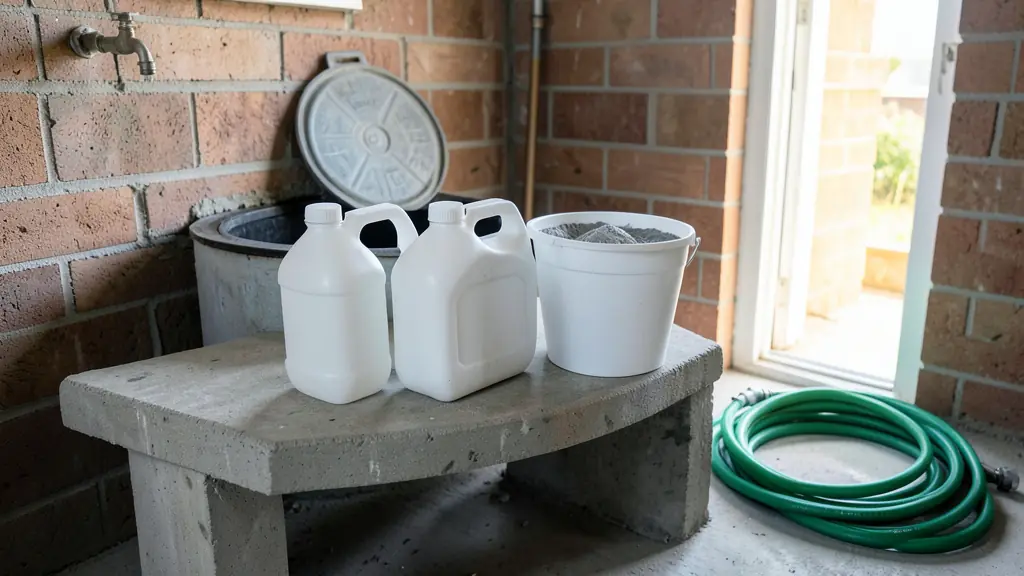
Walk into any hardware store and you will find shelves of septic tank chemicals: bacteria starters, enzyme liquids, powders and cleaning tablets. Some help a tank settle after a new installation or a pump-out, and some do more harm than good. Tell us what you need and how big your system is, and suppliers will quote retail or bulk stock, delivered or ready to collect. We will also point you to honest advice on dosing, because the cheapest bottle is not always the best value and some tanks need no product at all.
Bacteria, enzymes and tablets
A septic tank runs on bacteria that already live in the waste. Products try to support them in three ways:
- Bacteria starters: live cultures added to a new or freshly cleaned tank to restart digestion.
- Enzyme liquids: they help break down fats, paper and starch, and can reduce odours.
- Tablets and powders: slow-release doses flushed monthly, mostly useful for maintenance.
Many tanks do fine without any of them if the household uses the system sensibly, so treat these products as an optional extra and not a rescue.
What to avoid
Strong acids, caustic drain openers and bulk bleach kill the bacteria you rely on and can corrode pipes and tees. Disinfectant poured down the toilet by the litre is a common cause of a tank that smells worse after treatment. Solvents, paint thinners and pool chemicals should never go into a tank. If a product claims it will remove sludge so you never pump again, be sceptical. Use small amounts of ordinary household cleaners instead and check the label. Antibiotics, medicines and cooking oil also upset the balance, so keep them out of the drain. Wet wipes, nappies and sanitary products do not break down at all and should go in the bin.
Honest limits: they don't replace pumping
Sludge is mostly inert solids that bacteria cannot fully digest. Additives may slow the build-up a little, but they cannot empty the tank. Plan a septic tank clean every few years regardless, and have a service visit when you notice smells or slow drains. Chemicals are a supplement, not a repair for a blocked soakaway or a cracked tank. If water is surfacing on the lawn, a bottle will not fix it; ask an operator to look at the tank and the drainage first.
Bulk supply for businesses
Lodges, estates, farms and cleaning contractors often buy 20 or 25 litre containers or 25 kg bags and dose several tanks on a schedule. Suppliers can offer repeat deliveries, a dosing plan per tank size and safety data sheets for your compliance file. Ask for the active ingredients and the dose per 1,000 litres, and compare price per dose rather than price per bottle. Also ask about storage life, since liquid cultures weaken in heat, and whether the supplier will take back empty containers.
What to include in your request
- Tank size in litres and the number of tanks
- Product type wanted: starter, enzyme, tablets or powder
- Retail bottles or bulk containers, and how often
- Delivery address or collection preference
- The problem you want to treat, such as smells or grease
Septic Tank Chemicals for different properties
- Houses: a bacteria starter after a pump-out and a monthly tablet to keep the tank settled
- Smallholdings and plots: enzyme treatment for a large tank, with a pump-out still planned every few years
- Estates and complexes: a dosing plan for shared tanks, delivered by the supplier on a schedule
- Farms and game farms: bulk bacteria for worker housing tanks and farm kitchens that produce a lot of grease
- Lodges, guesthouses and venues: enzyme dosing to cope with seasonal peaks and laundry water
- Restaurants, shops and offices: regular products for tanks and grease lines at restaurants and takeaways
- Schools, churches and clinics: scheduled supply for schools and clinics, with safety data sheets on file
- Factories, mines, sites and events: drums of treatment for site ablution tanks and temporary camps
Frequently asked questions
Do septic tank enzymes really work?
How much do treatment products cost?
Should I add a starter after a pump-out?
Is it safe to flush tablets every month?
Septic Tank Chemicals by province and city
- Johannesburg
- Pretoria
- Centurion
- Midrand
- Sandton
- Randburg
- Roodepoort
- Krugersdorp
- Randfontein
- Germiston
- Boksburg
- Benoni
- Kempton Park
- Alberton
- Vanderbijlpark
- Vereeniging
- Durban
- Pinetown
- Pietermaritzburg
- Richards Bay
- Newcastle
- Ladysmith
- Gqeberha (Port Elizabeth)
- East London
- Kariega (Uitenhage)
- Mthatha
- Cape Town
- Bellville
- Paarl
- Stellenbosch
- George
- Worcester
- eMalahleni (Witbank)
- Middelburg
- Secunda
- Mbombela (Nelspruit)
- Rustenburg
- Brits
- Klerksdorp
- Potchefstroom
- Mahikeng
- Polokwane
- Tzaneen
- Kimberley
- Upington
- Bloemfontein
- Welkom
- Sasolburg