A septic tank does not need pumping on a fixed date. It needs pumping when the sludge on the floor and the scum on top have built up enough to take about a third of the tank, because past that point solids start to slip through to the soakaway. This calculator estimates that point from the size of your tank and the number of people using it, then uses the year of the last pump-out to show where you are now.
How the interval is worked out
Each person adds roughly 60 litres of sludge and scum a year. The tank is due for pumping when that has filled a third of its volume.
Years between pump-outs = (tank litres ÷ 3) ÷ (people × 60 × allowance)
e.g. a 2,500 L tank, 4 people: 833 ÷ 240 = 3.5 years
The allowance is 1.0 for a normal household. The calculator adds 30% for a garbage grinder, 20% for a lot of kitchen waste and 25% for regular guests, because all three put more solids into the tank. These are planning figures, not measurements.
The "sludge now" estimate assumes the tank was emptied properly in the year you pick and has filled at the same rate since. It is a guide. Only an inspection, with a sludge stick or a look through the lid, shows the real levels, and the operator or your municipality has the final word on how often the tank must be done.
Years between pump-outs by tank and household size
| Tank size | 2 people | 4 people | 6 people | 8 people |
|---|---|---|---|---|
| 1,700 L | 4.5 | 2.5 | 1.5 | 1 |
| 2,000 L | 5.5 | 3 | 2 | 1.5 |
| 2,500 L | 7 | 3.5 | 2.5 | 1.5 |
| 3,000 L | 8.5 | 4 | 3 | 2 |
| 4,000 L | 10+ | 5.5 | 3.5 | 3 |
| 5,000 L | 10+ | 7 | 4.5 | 3.5 |
| 6,000 L | 10+ | 8.5 | 5.5 | 4 |
Based on 60 L of sludge per person per year and pumping at one third full. Rounded to the nearest half year.
Notice how a small tank with a big family gets pumped every year or two, while a large tank for a couple can go close to a decade. In practice most operators and councils suggest an inspection every 2 to 3 years whatever the table says.
Signs you should not wait
- Slow drains and gurgling in the toilets and baths, especially after rain.
- Smells around the tank lid, the soakaway or the lowest drain.
- Wet, green or sunken patches over the soakaway, which means effluent is not soaking in.
- Sewage backing up at the lowest gully or toilet. Call a honey sucker the same day.
If you are not sure what is wrong, the septic problem checker ranks the likely causes. Use the size calculator to see whether the tank was big enough for the household in the first place.
What a pump-out involves
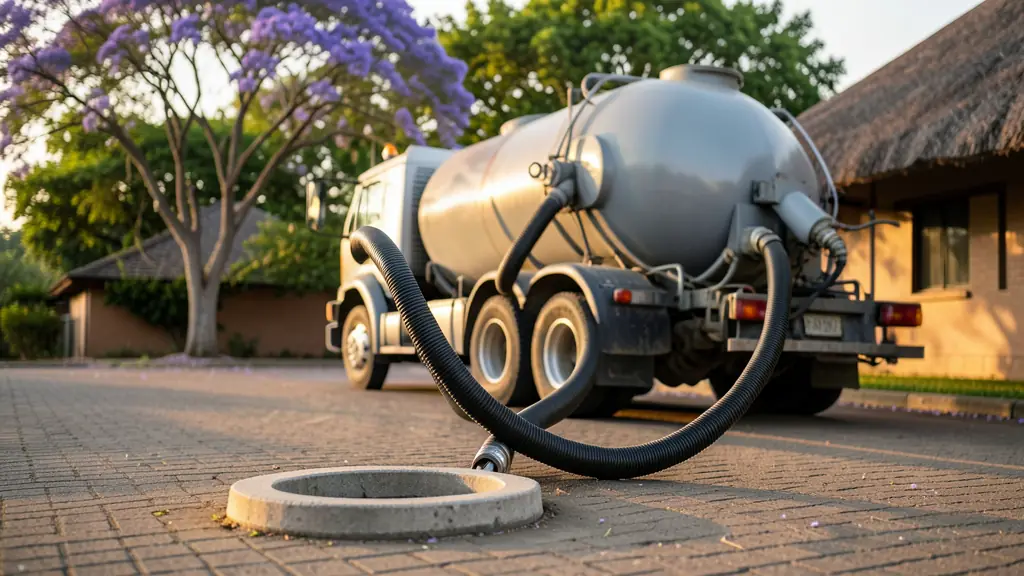
A honey sucker pulls the liquid, scum and sludge out through the lid and takes it to a licensed disposal point. A good operator leaves a little sludge behind as a starter for the bacteria and does not wash the tank with disinfectant. Expect roughly R1,500 to R3,800 per load for a house tank of 2,000 to 5,000 litres. Extra hose beyond about 30 metres, digging to find a buried lid and after-hours calls cost more. Read more on septic tank pumping and septic tank cleaning, or see what to keep out of the tank in the septic safe products list.