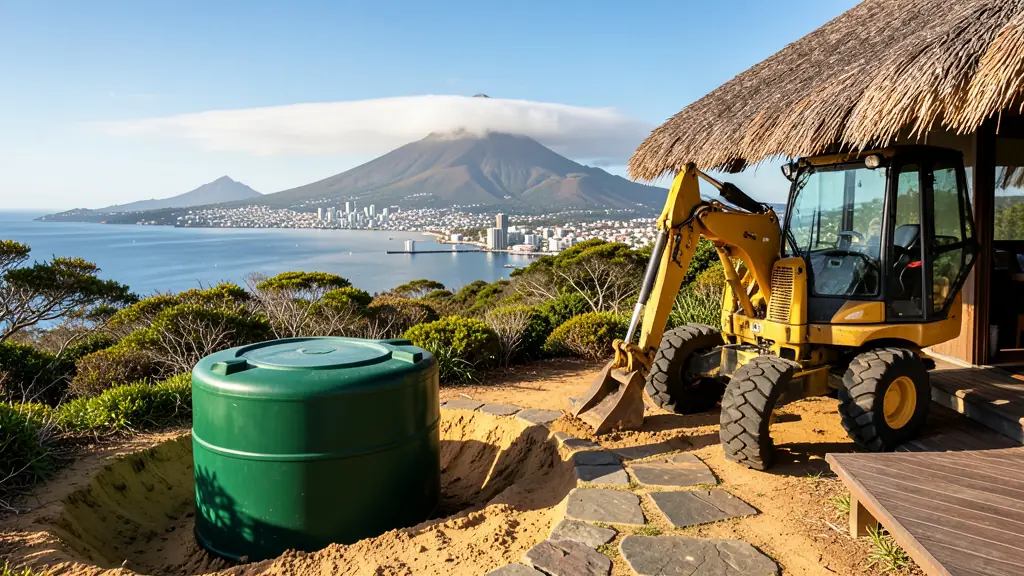
Phoning around for septic tank installation in Cape Town takes time, and every company asks the same questions. Send one job card instead and we pass it to septic installers and plumbers who serve Cape Town and nearby areas of Western Cape. They quote on the work, travel, disposal and how soon they can come.
Septic Tank Installation in Cape Town
Septic tank installation in Cape Town is usually ordered by owners building on plots without a sewer connection, by farms adding worker housing, and by lodges expanding. Share your stand size, soil type if you know it and where the house drain exits, so contractors serving Cape Town and the rest of Western Cape can quote properly.
Want to know more first? Our septic tank installation guide covers the options, what to check and what affects the price.
Septic tanks and drainage in Cape Town
Cape Town has an extensive sewer, but off-sewer areas are many: Kommetjie, Noordhoek, Hout Bay's upper slopes, Philippi horticultural area, Joostenberg and the Atlantic coast farms rely on septic tanks and conservancy tanks. Sandy soils on the Cape Flats mean a high winter water table, so soakaways flood in the wet months and sealed tanks are common. Granite and shale on the mountain slopes can need rock breaking. Industrial areas such as Montague Gardens and Paarden Eiland use grease traps and conservancy tanks. Honey sucker operators serve the metro from Epping, Montague Gardens and the Cape Flats, and portable toilet hire is busy at events.
Typical septic tank installation requests in the area come from:
- Houses: a new tank and drainage field for a house built or extended away from the sewer
- Estates and complexes: tanks and drainage laid for each stand or shared units before the units are occupied
- Restaurants, shops and offices: approved systems for shops, restaurants and offices outside the sewer network
- Factories, mines, sites and events: site tanks for construction camps and workshops, installed to a set programme
- Smallholdings and plots: a full system on a smallholding, with a larger field and a long pipe run
- Lodges, guesthouses and venues: larger tanks and fields sized for guest numbers, often with a treatment plant
- Farms and game farms: separate systems for the homestead and worker housing, kept clear of boreholes
- Schools, churches and clinics: large tanks for schools and clinics, with plans signed off by a professional
Local tips for Cape Town
In Cape Town, the most common systems are conservancy tanks on the Cape Flats, septic tanks with soakaways on mountain slopes. Operators and suppliers mostly work from operators in Epping, Montague Gardens and across the Cape Flats. A useful tip: ask for a pump-out before winter if your tank sits in low-lying sandy ground.
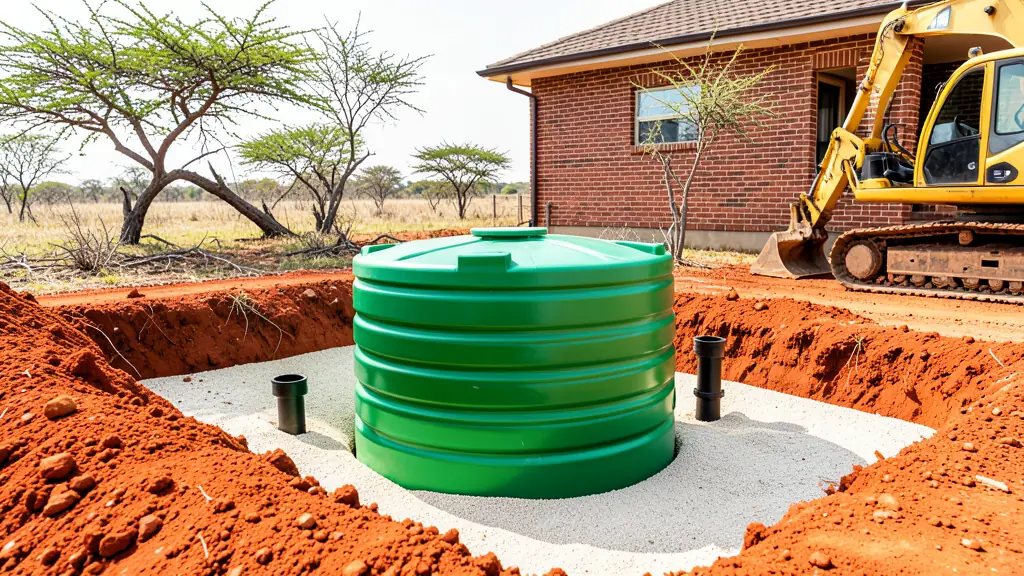
Septic Tank Installation usually means excavate, bed, level, connect and drain, for 2,500 to 10,000 L tanks for homes, one-off job, 2 to 4 days on site. Ground in the area: sandy Cape Flats with a high winter water table: soakaways flood.
What to include in your request
- Plot size and where the house drain leaves the building
- Number of bedrooms or people using the system
- Distance to any borehole, well, boundary or stream
- Soil type, rock or a high water table if known
- Whether municipal approval and plans are done or needed
The more detail you give, the more accurate your quote will be.
Service area: Cape Town and surrounds
Operators, contractors and suppliers on our network work in Cape Town and surrounding areas, including Century City, Woodstock, Epping, Montague Gardens, Paarden Eiland, Claremont, Salt River. Give the suburb, holding or farm name so the quote can include travel, and say how soon you need someone.