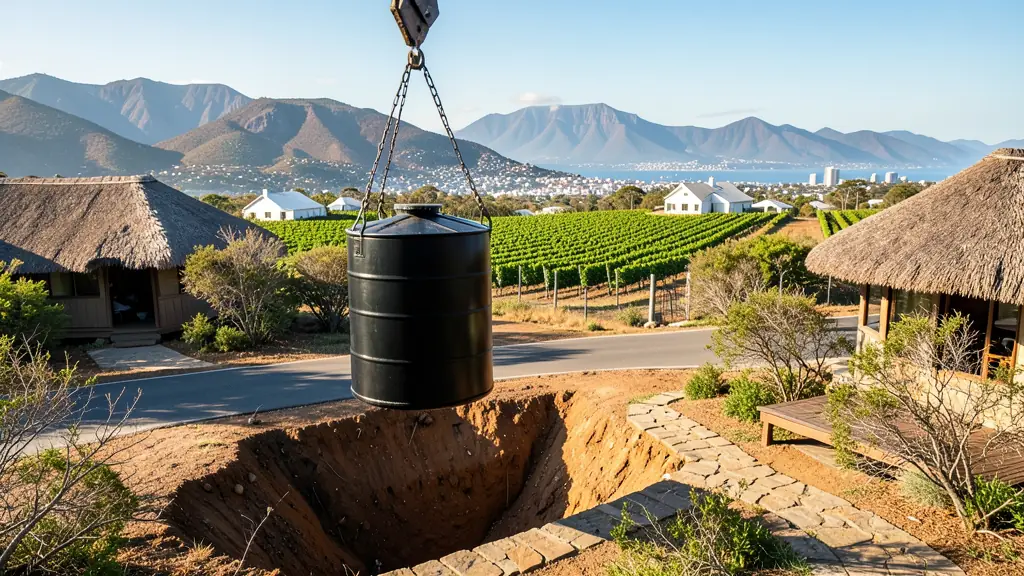
Looking for conservancy tanks in Western Cape? SepticTankCleaning.co.za puts homeowners, smallholders, farms, lodges and businesses in Western Cape in touch with a tank supplier who works in towns, plots and farms across Western Cape. Fill in the job card and you receive a quote directly, free and with no obligation.
Conservancy Tanks in Western Cape
Conservancy tanks in Western Cape are most often chosen where the ground is too wet or too rocky for drainage, or where a sewer has not yet reached the area. Tell suppliers the stand size, the water use and how far the nearest truck access is, so those serving Western Cape and the rest of Western Cape can recommend a tank size.
Want to know more first? Our conservancy tanks guide covers the options, what to check and what affects the price.
Septic tanks and drainage in Western Cape
The Western Cape has a mix of sewered suburbs and many properties on tanks. Winter rain and a high water table on the sandy Cape Flats, West Coast and Overberg make soakaways unreliable, so conservancy tanks and treatment plants are common. Wine and fruit farms around Stellenbosch, Paarl, Worcester and Ceres use septic tanks, french drains and plants that struggle during harvest season peaks. Garden Route homes and lodges in George, Knysna and Plettenberg Bay sit on wet, steep ground near estuaries and lagoons, where regulators watch discharge closely. Honey sucker operators and tank suppliers work from Montague Gardens, Bellville, Paarl and George.
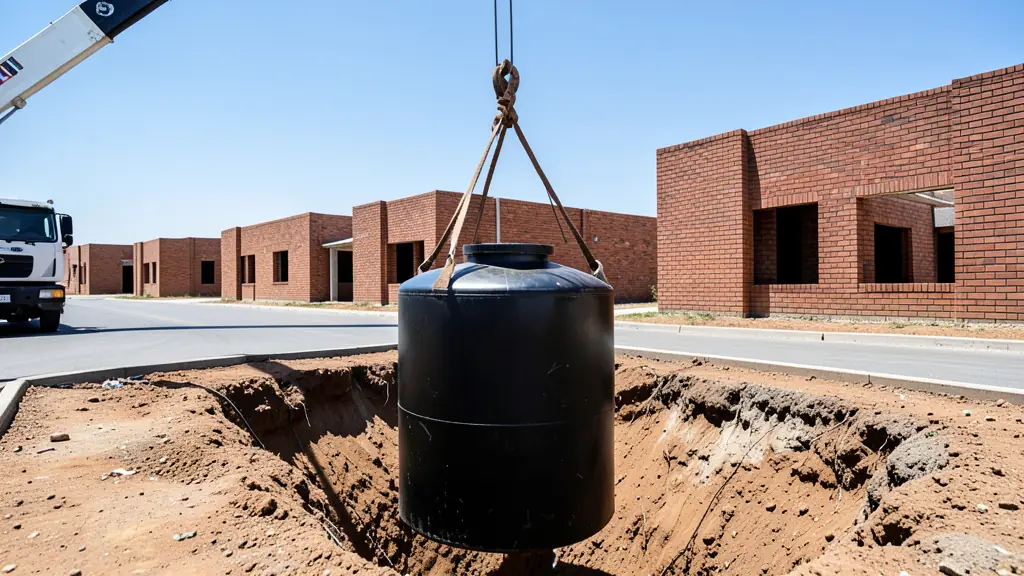
Typical conservancy tanks requests in the area come from:
- Farms and game farms: a sealed tank near a borehole or river where discharge is not allowed
- Houses: a sealed tank for a house on a small stand where a drainage field will not fit
- Lodges, guesthouses and venues: big tanks with a high-level alarm for chalets in sensitive areas, emptied on a regular round
- Estates and complexes: large linked tanks for a complex awaiting a sewer, with a pump-out schedule
- Smallholdings and plots: a holding tank where rock or a high water table rules out a soakaway
- Restaurants, shops and offices: a holding tank for a shop or filling station with an upstream grease trap
- Factories, mines, sites and events: bulk holding tanks for sites and works that must not discharge on the ground
- Schools, churches and clinics: sealed tanks for a school or clinic, sized for the term-time load
Local tips for Western Cape
In Western Cape, the most common systems are conservancy tanks on sandy ground, treatment plants on wine farms and Garden Route lodges. Operators and suppliers mostly work from operators based in Montague Gardens, Bellville, Paarl and George. A useful tip: ask for proof of lawful disposal, especially near estuaries and rivers.
Conservancy Tanks usually means sealed holding tank with no outlet, for 5,000 to 30,000 L, or tanks linked, emptied every 2 weeks to 3 months. Ground in the area: sandy flats with a high winter water table, wet steep ground on the Garden Route.
What to include in your request
- Daily water use, or the number of people and units
- How often you want the tank emptied
- Why the tank is needed: municipal rule, high water or rock
- Tank material wanted: plastic or concrete
- Truck access to the lid and to the excavation
The more detail you give, the more accurate your quote will be.
Service area: Western Cape and surrounds
Operators, contractors and suppliers on our network work throughout Western Cape, including Cape Town, Stellenbosch, Paarl, George, Knysna, Hermanus, Worcester. For smaller towns and farms, ask what the travel charge is from the nearest base and how far it is to the disposal site.