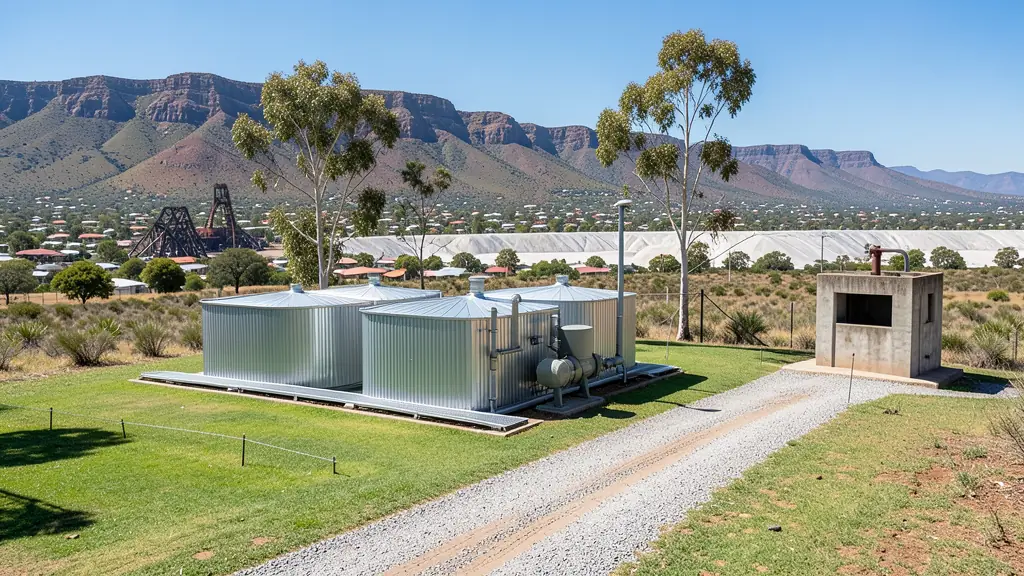
Phoning around for sewage treatment plants in Rustenburg takes time, and every company asks the same questions. Send one job card instead and we pass it to treatment plant suppliers and installers who serve Rustenburg and nearby areas of North West. They quote on the work, travel, disposal and how soon they can come.
Sewage Treatment Plants in Rustenburg
Sewage treatment plants in Rustenburg are mainly wanted by estates, lodges, schools and industrial sites that sit beyond the municipal network or have outgrown a septic system. Give the daily flow, the number of users and where treated water will go, so suppliers serving Rustenburg and the rest of North West can propose a suitable plant.
Want to know more first? Our sewage treatment plants guide covers the options, what to check and what affects the price.
Septic tanks and drainage in Rustenburg
Rustenburg is platinum country, and rapid mining growth has left large areas off the sewer or served by overloaded networks. Suburbs like Safari Gardens and Cashan are connected, but smallholdings along the Magaliesberg foothills, farms around Kroondal and Mooinooi, and peri-urban settlements near Phokeng and Boitekong depend on septic tanks, pit conversions and conservancy tanks. Mine contractors and construction camps need bulk tanks and portable toilets. Heavy black turf clay swells in the wet season and cracks in the dry, which breaks drains and tanks. Honey sucker operators work from Rustenburg and Kroondal, and lodges on the Magaliesberg run treatment plants.
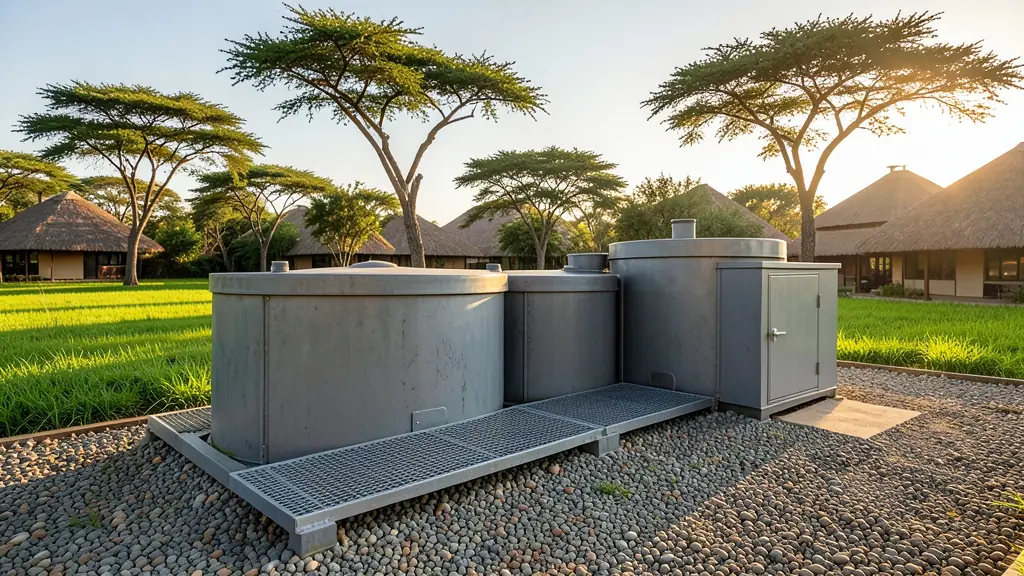
Typical sewage treatment plants requests in the area come from:
- Smallholdings and plots: a small plant for a large smallholding with several homes and heavy use
- Factories, mines, sites and events: a plant for a mine camp or factory, with sampling and waste records
- Houses: rarely used at a house; a septic tank or biodigester is normally enough
- Lodges, guesthouses and venues: a plant sized for peak guest numbers, reusing water on lawns in dry regions
- Farms and game farms: a plant for worker housing and a packhouse, with treated water for irrigation
- Schools, churches and clinics: a plant for a boarding school, clinic or hospital with steady, large flows
- Restaurants, shops and offices: a plant for a mall, hotel or filling station away from the sewer network
- Estates and complexes: a package plant for a whole estate, with treated water used on common gardens
Local tips for Rustenburg
Most work in Rustenburg is done by teams based in honey sucker operators based in Rustenburg and Kroondal, and the usual setup is septic and conservancy tanks on holdings, bulk tanks for mine contractor camps. When you ask for quotes, ask for a tank inspection for cracks, not just a pump-out, on older clay-bed tanks.
Sewage Treatment Plants usually means aerated plant: activated sludge or MBBR, for 5 to 500 kL a day, built to suit, serviced monthly, sludge removed as needed. Ground in the area: swelling black turf clay that cracks tanks and drains in the dry season.
What to include in your request
- Daily flow in kilolitres, or the number of users
- Where treated water will go: irrigation, dam or river
- Power supply on site, or a generator or solar
- Plant type preferred: activated sludge, MBBR or open
- Whether you need servicing and sampling after commissioning
The more detail you give, the more accurate your quote will be.
Service area: Rustenburg and surrounds
Operators, contractors and suppliers on our network work in Rustenburg and surrounding areas, including Phokeng, Boitekong, Tlhabane, Marikana, Kroondal, Mooinooi, Safari Gardens. Give the suburb, holding or farm name so the quote can include travel, and say how soon you need someone.