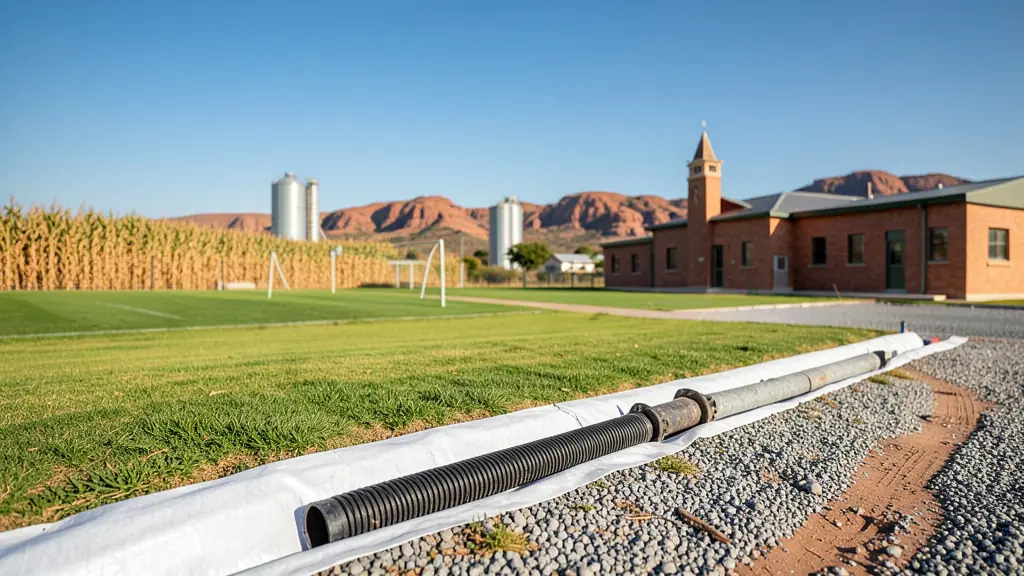
Phoning around for french drain in Free State takes time, and every company asks the same questions. Send one job card instead and we pass it to drainage contractors and septic installers who serve towns, plots and farms across Free State. They quote on the work, travel, disposal and how soon they can come.
French Drains in Free State
French drain work in Free State is mostly booked by owners of plots and older houses for septic tank drainage, and by homeowners dealing with damp walls, wet lawns and runoff. Tell the contractor which kind you need, the slope and the soil, so operators serving Free State and the rest of Free State can quote accurately.
Want to know more first? Our french drain guide covers the options, what to check and what affects the price.
Septic tanks and drainage in Free State
Free State towns are largely on sewer, but farms, smallholdings and many older homes outside Bloemfontein, Welkom and Kroonstad run septic tanks and conservancy tanks. Clay soils that swell and shrink often block soakaways, and cold winters slow bacterial action, so tanks fill faster than owners expect. Maize and cattle farms use french drains and tanks at homesteads and worker housing, while schools, clinics and churches in smaller towns depend on scheduled pump-outs. Around Clarens, Bethlehem and Harrismith, guesthouses and weekend lodges add holiday peaks. Sasolburg's industrial sites need bulk waste removal. Honey sucker operators and tank suppliers work from Bloemfontein, Welkom, Sasolburg and Bethlehem.
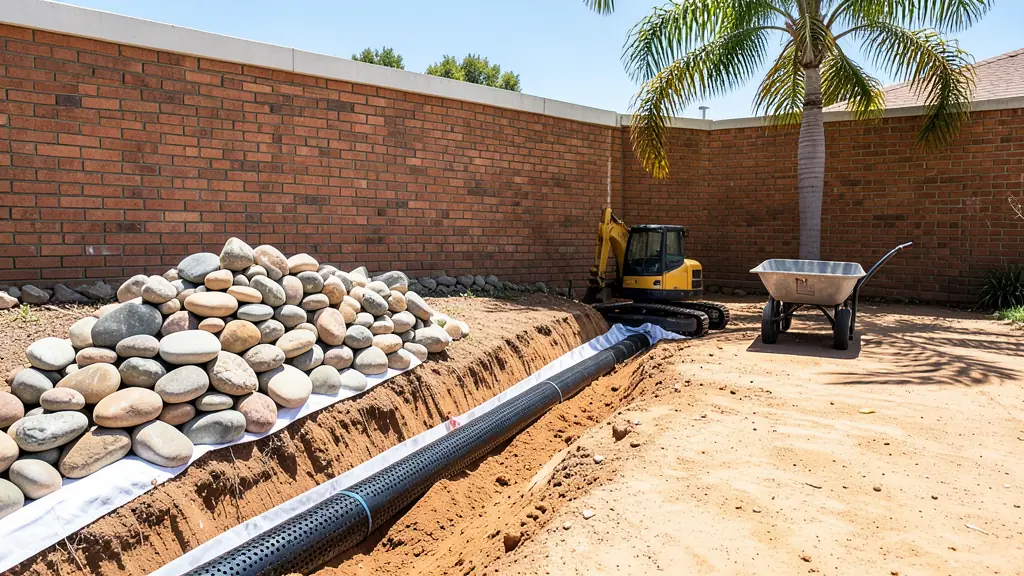
Typical french drain requests in the area come from:
- Farms and game farms: septic trenches for homesteads and drains that protect buildings and roads from runoff
- Houses: a trench for a septic tank at an older house, or a stormwater drain along a damp wall
- Smallholdings and plots: a longer septic trench on a smallholding, plus drains that carry runoff off the yard
- Schools, churches and clinics: long trenches for school and church septic systems, and drains keeping playgrounds dry
- Lodges, guesthouses and venues: larger trenches for peak guest loads and drains that keep paths and decks dry
- Factories, mines, sites and events: drains on yards, depots and building sites where runoff would otherwise pond
- Restaurants, shops and offices: stormwater trenches for parking and retail frontages, and septic trenches for rural shops
Local tips for Free State
In Free State, the most common systems are septic tanks and french drains on farms, conservancy tanks for older town properties. Operators and suppliers mostly work from operators based in Bloemfontein, Welkom, Sasolburg and Bethlehem. A useful tip: ask whether the soakaway was tested for clay before it was extended.
French Drains usually means trench, perforated pipe and clean stone, for 5 to 60 m of trench, 90 to 110 mm pipe, lasts 15 to 30 years if maintained. Ground in the area: clay soils that swell and shrink: soakaways clog, and cold slows the tank.
What to include in your request
- Whether the drain is for a septic tank or for stormwater
- Roughly how long the trench needs to run, and on what slope
- Soil type (clay, sand, rock) and whether the ground floods
- Where the water must go: a pit, a lower garden or a stormwater drain
- Whether an old drain must be dug up and replaced
The more detail you give, the more accurate your quote will be.
Service area: Free State and surrounds
Operators, contractors and suppliers on our network work throughout Free State, including Bloemfontein, Welkom, Kroonstad, Bethlehem, Sasolburg, Harrismith, Clarens. For smaller towns and farms, ask what the travel charge is from the nearest base and how far it is to the disposal site.