Whether it is one house tank or a whole estate, our free service makes it easy to price concrete septic tanks in Eastern Cape. Your request goes to a tank supplier serving towns, plots and farms across Eastern Cape, so you can compare prices and response times before you commit.
Concrete Septic Tanks in Eastern Cape
Concrete septic tanks in Eastern Cape are common on older plots, farms and institutions, and many owners now repair or replace tanks that have cracked or leaked. Mention whether you want rings, a factory-made tank or a built-in-place tank, so suppliers and builders serving Eastern Cape and the rest of Eastern Cape can quote accurately.
Want to know more first? Our concrete septic tanks guide covers the options, what to check and what affects the price.
Septic tanks and drainage in Eastern Cape
Large parts of the Eastern Cape sit off the sewer, from Wild Coast villages and rural homesteads around Mthatha to farms near Graaff-Reinet and holiday homes along the Sunshine Coast. Coastal sand and a high water table around Jeffreys Bay, Port Alfred and Kenton-on-Sea flood soakaways, so conservancy tanks and package plants are common. Inland Karoo farms use septic tanks and french drains that rarely get rain to wash them. Schools and clinics in rural areas need scheduled pump-outs, and factories around Kariega and Coega need bulk removal. Honey sucker operators and tank suppliers are based mainly in Gqeberha and East London, so distant jobs cost more.
Typical concrete septic tanks requests in the area come from:
- Houses: a concrete tank to replace or repair an old two-chamber tank at an off-sewer house
- Schools, churches and clinics: large tanks for schools and churches, repaired during school holidays
- Farms and game farms: rings and tanks for worker housing, built with local labour and materials
- Lodges, guesthouses and venues: big concrete tanks for chalets, set away from guest areas with good ventilation
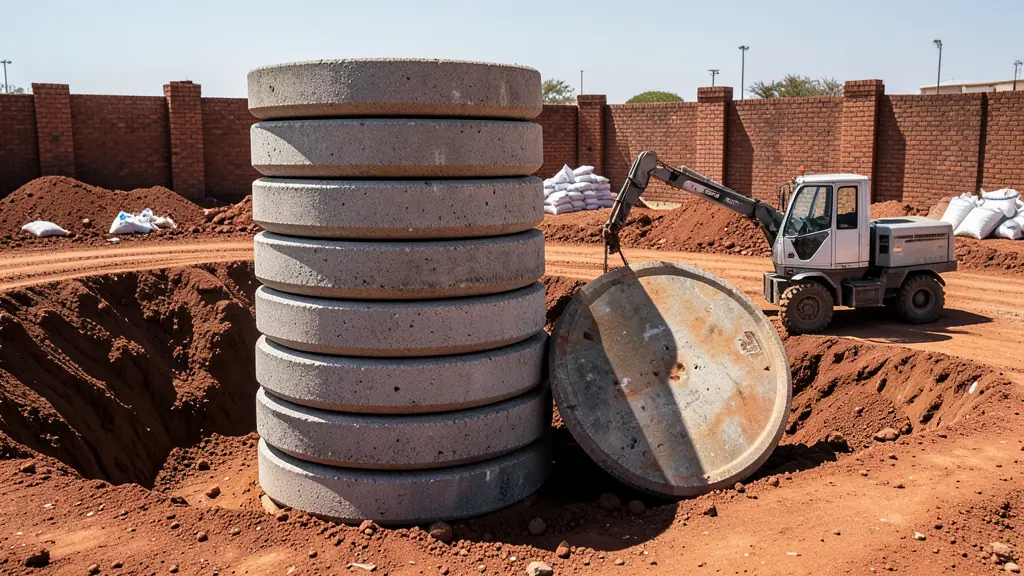
- Smallholdings and plots: stacked rings for a smallholding where a crane truck can reach the site
- Factories, mines, sites and events: heavy-duty tanks for depots and works where trucks pass over the lids
- Restaurants, shops and offices: a heavy tank behind a shop or garage, often under a parking area
Local tips for Eastern Cape
In Eastern Cape, the most common systems are conservancy tanks and package plants on the coast, septic tanks on Karoo farms. Operators and suppliers mostly work from operators based mainly in Gqeberha and East London. A useful tip: ask how often the tank should be emptied if holiday use is seasonal.
Concrete Septic Tanks usually means concrete tank buried, with lid and tees, for 2,000 to 20,000 L, rings or full tanks, inspect yearly, lasts 30 to 40 years. Ground in the area: sandy coastal ground with a high water table, dry hard Karoo soil inland.
What to include in your request
- Tank size in litres, or the number of people using it
- Rings, a factory-made tank or a built-in-place tank
- Access for a crane truck, and the distance to the hole
- Whether the old tank is cracked, leaking or being replaced
- Any vehicle traffic over the tank or lid position
The more detail you give, the more accurate your quote will be.
Service area: Eastern Cape and surrounds
Operators, contractors and suppliers on our network work throughout Eastern Cape, including Gqeberha, East London, Mthatha, Makhanda, Jeffreys Bay, Port Alfred, Graaff-Reinet. For smaller towns and farms, ask what the travel charge is from the nearest base and how far it is to the disposal site.