
Fundamentals and Terminology
What is a septic tank?
South Africa’s backyards still run on on-site wastewater, and the real drama unfolds in the tank. A recent survey shows that up to 60% of rural homes rely on these systems to keep things flowing—quite literally.
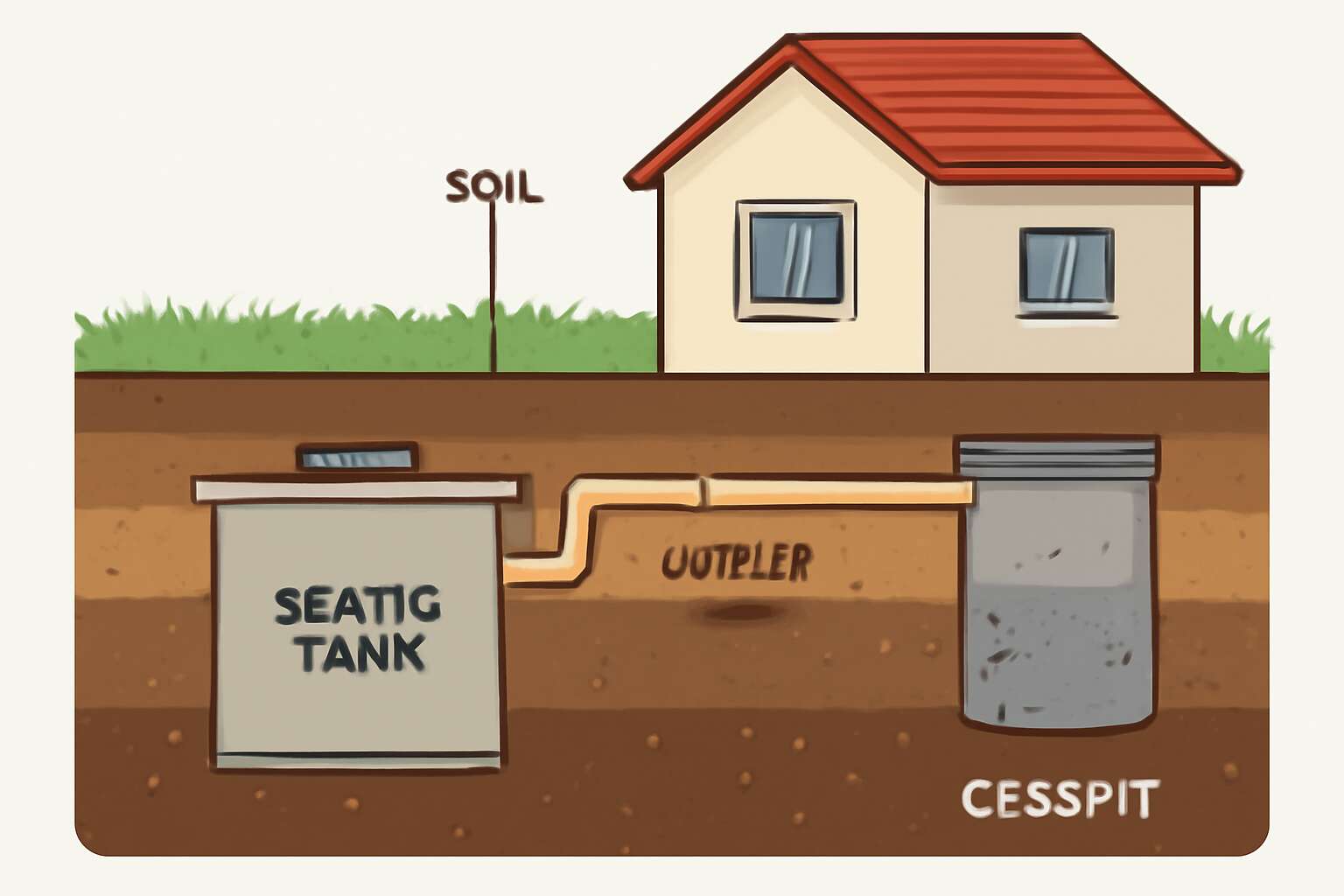
Fundamentals and Terminology: What is a septic tank? A septic tank is a water-tight chamber where solids settle and beneficial bacteria tackle the rest, producing effluent that slowly exits to a soakaway or drainage field. It operates best with regular pumping and a simple design that separates sludge from scum.
- Inlet pipe brings in household waste
- Outlet leads to the drainage area
- Baffles separate layers and prevent clogging
- Effluent is relatively clear liquid, not sewage in your garden
In contrast to a cesspit, a septic tank performs a first act of treatment; the cesspit merely stores waste. Understanding this helps you navigate the septic tank vs cesspit question with confidence.
What is a cesspit?
A cesspit is a watertight underground chamber designed to store sewage until it is removed. Unlike a septic tank, no digestive action occurs inside. In the ongoing South African context of on-site wastewater, the distinction between containers matters; in the broader debate of septic tank vs cesspit, the emphasis shifts from processing to containment.
- Inlet pipe brings in household waste
- There is no internal digestion stage
- Storage is sealed and finite; it fills and must be pumped
- Regular emptying by a licensed operator is essential
That storage-focused design mirrors a broader question about responsibility: safety and environmental protection hinge on a tight seal and timely removal, and on mindful maintenance. Odour control, user responsibility and local regulations shape whether a cesspit remains a viable solution in South Africa’s varied soils and climates.
Key differences between septic tank and cesspit
In South Africa, failed containment costs more than money — it harms soil, water and neighbourly trust. septic tank vs cesspit is more than a label—it’s a safety decision. One path uses digestion; the other stores waste behind a watertight wall. When containment is solid, risk stays low.
Fundamentally, these terms describe two containment philosophies. A septic system relies on natural processes to reduce solids and separate liquids, while a cesspit simply accumulates waste with no breakdown. The terminology signals how a site must be managed and what local rules expect.
Key considerations include:
- Containment versus treatment
- Impacts on soil, groundwater and odour
- Regulatory expectations and site suitability
In South Africa’s varied soils and climates, the seal, capacity and upkeep shape viability. The debate around septic tank vs cesspit evolves with emphasised safety and environmental stewardship, directing property owners toward systems that align with their landscape and regulations.
Septic Tank vs Cesspit: Key Differences
A single containment breach can echo through soil and groundwater for years—it’s more than a legal headache; it’s a community wound. ‘Containment is the first act of stewardship,’ a South African inspector told me, and that urgency sticks.
Fundamentals hinge on two philosophies. A septic system relies on digestion and separation to reduce solids while releasing treated liquid; a cesspit simply stores waste behind a watertight wall. That label, septic tank vs cesspit, acts like a map: it tells you what must be monitored, tested, and regulated.
- Containment versus treatment
- Impacts on soil, groundwater and odour
In South Africa’s varied soils and climates, seal, capacity and upkeep shape viability. The debate evolves as safety and environmental stewardship push owners toward systems that match their landscape and rules.
How They Work and Design
Septic tank operation basics
How They Work and Design Septic tank operation basics intersect in an underground tale that powers every home. “The system that keeps your home humming is invisible until it gurgles,” a seasoned installer likes to say. In the septic tank vs cesspit debate, solids settle while liquids drift on to drainage, and the design must suit South Africa’s soils and climate. This fusion of science and soil creates a quiet engine beneath our feet, shaping health, safety, and peace of mind.
Key elements of design basics at work include:
- Inlet and outlet baffles to steer flow
- Three-layer separation: scum, sludge, and clear liquid
- Durable, corrosion-resistant materials and accessible inspection ports
In operation, bacteria in the anaerobic core break down organics while the effluent moves through the soil. The difference between the two systems becomes clear in how each handles liquids and prevents leakage into groundwater—a concern across South Africa’s varied landscapes.
Cesspit operation basics
Hidden beneath South African homes, a quiet engine hums—almost supernatural in its reliability. In the septic tank vs cesspit dialogue, what happens inside matters more than the box on the ground. Septic tanks trap solids and let liquids mingle with the soil, while cesspits store waste and rely on soil to filter with every rainfall. Anaerobic digestion chips away at organics, and the right design shields groundwater across our varied soils and climates.
Design for cesspit operation basics centers on containment and maintenance—durable materials, robust seals, and accessible inspection points, never skimped where leakage could threaten aquifers. The aim is to align with local soil conditions and water tables, preventing contamination before it begins. In this quiet contest, the difference is clear: where liquids are managed, health and peace of mind follow.
- Containment integrity
- Accessible inspection points
- Soil and groundwater protection
Drainage field vs storage considerations
Inside the quiet boxes beneath South African homes, the drama unfolds in whispered currents. The debate between septic tank vs cesspit isn’t about space on the ground; it’s about what happens inside: solids settle, liquids mingle with the soil, and anaerobic microbes do stubborn work on organics. The land’s fingerprints—varied soils, rainfall patterns, and groundwater—demand a design that respects nature’s limits.
- Subsurface interactions and moisture movement
- Capacity aligned with seasonal flow and rainfall regimes
- Site constraints shaped by geology, water table, and climate
Drainage design isn’t a sterile calculation; it’s a choreography of field versus storage considerations. When the land drinks slowly, a well-placed drainage field can work in harmony with the soil. When bursts of rain threaten, storage capacity becomes the quiet anchor.
That deeper balance—between containment and flow—defines the sentinel boundary between risk and reassurance.
Materials, sizing, and installation guidelines
The ground holds a quiet drama: “Balance is built below ground,” a veteran installer says, and within the subsurface boxes in South African homes, wastewater reveals its rhythm. When you weigh septic tank vs cesspit, you weigh not containment alone but how solids settle, liquids mingle, and microbes keep watch on organics.
Design materials and sizing balance local conditions with stewardship. Materials—concrete, rotomoulded plastic, or fibreglass—resist sun and groundwater effects. Sizing reflects occupancy and peak wastewater; installation requires licensed professionals, proper access, and compliant siting.
- Materials: concrete, plastic, fibreglass
- Sizing: occupancy and peak flows
- Installation: permits, professional assessment, compliant siting
Beyond the box, installation philosophy matters: proper venting, maintenance access, and thoughtful siting near wells and gardens. In the South African landscape, local soils and climate shape every project, turning numbers into a living system that sustains households with quiet, resilient efficiency.
Advantages and Disadvantages
Benefits of septic tanks
Ask any South African plumber in the septic tank vs cesspit debate, and they’ll tell you: “reliability and odour control matter more than glossy labels.” A well-sized septic tank delivers predictable performance, fewer smells, and a long service life when paired with solid maintenance and a proper drainage field.
- Reduced odour when ventilated and sealed
- Lower ongoing maintenance with correct sizing
- Suitable for properties without gravity-fed irrigation options
Disadvantages: the septic tank route still demands professional sizing and a drainage field. Missteps rack up repair costs and groundwater risks, especially in sandy soils or flood-prone areas.
Drawbacks of septic tanks
In the septic tank vs cesspit debate, reliability and long-term costs weigh heavy in South Africa’s varied soils. When properly sized and paired with a drainage field, a septic tank offers predictable performance and a longer service life. The secret is professional sizing and a sealed, ventilated setup that respects local groundwater and flood risk.
- Consistent operation with correct sizing minimizes surprises during peak flows
- A compact footprint that suits tighter plots found on many SA properties
Disadvantages? They exist. Mis-sizing, poor installation, or sandy soils raise repair costs and the risk of groundwater contamination. The need for a drainage field and professional maintenance can be a hurdle in rural settings.
- Groundwater risk increases in permeable or flood-prone soils
- Higher upfront costs and ongoing inspection requirements
Benefits of cesspits
In the ongoing septic tank vs cesspit debate, a simple truth stands out: cesspits offer straightforward promise where soil and water behave predictably. For tight rural plots and steady groundwater, a well-built cesspit can feel like a quiet, dependable neighbour, storing waste without the complexity of a drainage field.
Advantages of a well-sited cesspit include a compact footprint and predictable maintenance needs, making it a practical fit on smaller SA properties.
- No drainage field required, reducing yard disruption
- Fewer moving parts, which lowers maintenance surprises
Yet drawbacks exist. A cesspit depends on regular pumping to avoid overflow and odors, and leaching risks threaten groundwater in permeable soils or flood-prone areas. In such settings, the choice between septic tank vs cesspit shifts toward more robust systems that pair storage with treatment.
Drawbacks of cesspits
In the septic tank vs cesspit discussion, the appeal of the latter often lies in simple, predictable operation on tight plots. On small SA properties, a well-sited cesspit can feel like a steady neighbour, stowing waste with minimal infrastructure. It prioritizes practicality over complexity, letting land, budget, and siting realities dictate the arrangement.
Yet drawbacks come with storage limits and a dependence on timely pumping to prevent overflow. Odor control can lag if service slips, and groundwater risk grows in permeable soils or flood-prone areas. In those settings, the septic tank vs cesspit choice leans toward solutions that combine containment with treatment or alternative approaches suited to water-sensitive landscapes.
- Space efficiency on tight rural plots
- Predictable maintenance cadence when pumping is regular
- Groundwater leaching and odor risks in challenging soils
Cost Considerations and Regulations
Installation costs and timelines
In South Africa, soil and water politics collide, and every wastewater choice writes the future of a property. When weighing septic tank vs cesspit, cost considerations rise alongside capacity and site constraints. The decision threads through installation costs and timelines, yet the stakes are more than money; they define resilience and long-term land use.
- Upfront installation and trenching costs
- Permits, inspections, and regulatory fees
- Soil testing and site preparation
- Longer-term maintenance and emptying schedules
Regulatory pathways in SA bite quickly: local councils and national standards govern approvals, wiring, and environmental safeguards. Timelines vary from a few weeks to several months, depending on site complexity and compliance checks. Early coordination with a qualified professional helps set realistic expectations for the project.
Maintenance and pumping schedules
In South Africa, wastewater choices shape land resilience and the future of a property. The debate between septic tank vs cesspit is not merely price—it’s a verdict on how well a site breathes for decades.
Cost considerations span upfront and ongoing costs: permits, soil testing, installation, and service. The full lifecycle matters more than the sticker price.
- Permits and inspections aligned with SA standards
- Soil testing and site preparation as a solid foundation
Regulatory pathways in SA bite quickly: municipal and national standards govern approvals, safeguards, and disposal. Timelines range from weeks to months and hinge on site complexity.
Maintenance schedules hinge on capacity and soil; regular pumping and inspections keep systems healthy and compliant.
Regulatory requirements, permits, and inspections
Sitewise, the true price of wastewater solutions isn’t the sticker on the invoice—it’s how a property breathes for decades. When weighing septic tank vs cesspit, the costs stretch beyond installation to permits, soil testing, ongoing service, and eventual upgrades. That full‑lifecycle view helps homeowners avoid sharp outlays and protect land resilience for the long haul.
Regulatory requirements, permits, and inspections frame every step.
- Permits aligned with SA standards
- Soil testing and site assessment
- Site plan approvals and safeguards
- On-site inspections at milestones
Across South Africa, timelines hinge on site complexity, with approvals moving from weeks to months. Compliance safeguards water resources, property values, and public health alike, turning regulatory hoops into long-term confidence.
Warranties, insurance, and long-term risk
Cost isn’t merely the sticker price; it’s the breath a system takes over decades. When weighing septic tank vs cesspit, homeowners must account for installation, soil testing, pumping cycles, and the upgrades aging systems often require. The long view rewards patience with resilience and peace of mind.
Warranties, insurance, and long-term risk frame the decision as surely as soil and water do. Reputable installers back components and workmanship with warranties; insurers reflect system durability in premiums when risk sits near aquifers or basements. Regulatory compliance, aligned with South Africa’s standards, protects residents and land value, transforming uncertainty into a guarded future.
- Maintenance cadence and pumping costs over time
- Potential upgrades to drainage fields or containment caps
- Liability from leaks, contamination, and cross-property risk
In the end, finances and land stewardship cohere when choices align with site realities and long horizons.
Troubleshooting, Upgrades, and Replacements
Signs of septic system failure
In South Africa, a sudden backup is more than a nuisance; it’s a safety issue. Troubleshooting a septic tank vs cesspit means reading clues, not guessing. Look for odors, slow drains, damp patches, and backups. Common checks:
- Persistent foul smell around the tank or drain field
- Backups in toilets or sinks after rainfall
- Soggy, foul patches on the yard
If these signs appear, you’re dealing with differences in how septic tank vs cesspit systems handle wastewater.
Upgrades: To boost reliability, consider better access for pumping, a filtration step, or improved venting. With septic tank vs cesspit, upgrades should match the system’s storage and treatment design; a one-size-fits-all approach rarely works.
Replacements: Cracked tanks, degraded liners, or persistent effluent leaks call for replacement. In SA, inspections can prompt timing and permit considerations, so plan for contractor involvement and site works.
Signs of cesspit issues
Troubleshooting signs for a cesspit in the SA landscape can feel like deciphering a weathered rune. Odors linger around access points, rainfall stirs unexpected backups, and soggy patches betray stored waste finding its way to the surface.
- Persistent foul smell around the cesspit access
- Backups in toilets or sinks after rainfall
- Soggy, foul patches on the yard
Upgrades: To boost reliability, consider better access for pumping, a filtration step, or improved venting. With septic tank vs cesspit, upgrades should match the system’s storage and treatment design; a one-size-fits-all approach rarely works.
Replacements: Cracked tanks, degraded liners, or persistent effluent leaks call for replacement. In SA, inspections can prompt timing and permit considerations, so plan for contractor involvement and site works. In the septic tank vs cesspit comparison, this hinges on containment integrity.
When to upgrade or replace with modern systems
Troubleshooting in SA’s climate means reading signs quickly. A persistent foul smell around the access point can signal a vent or seal problem. Backups after heavy rain hint at blockages, while soggy patches in the yard betray effluent seeping from containment. In the septic tank vs cesspit discussion, symptoms guide the next move.
Upgrades should match storage and treatment realities, not a one-size-fits-all fix. Better access for pumping, a filtration step, and improved venting can boost reliability for either system.
- Access design for servicing
- Filtration or solids handling concepts
- Ventilation and odor control concepts
Replacements come when cracking or liner degradation leaks persist. In SA, inspections drive timing and permit needs, so plan for contractor involvement and site works. When comparing septic tank vs cesspit, containment integrity often dictates the replacement decision.
Hiring professionals and safety considerations
Troubleshooting around septic tank vs cesspit starts with signs you can’t ignore. A persistent foul smell near the access point, backups after heavy rain, or soggy patches in the yard all demand quick attention. In this context, identifying the right issue guides the next move.
- Check venting and seals for leaks or blockages
- Look for overflow at the access lid
- Limit system use while diagnosing
Upgrades should align with storage and treatment reality, not chase a one-size-fits-all fix. Improve access for pumping, introduce a filtration step, and enhance venting to boost reliability for either septic tank vs cesspit.
- Access design for servicing
- Filtration or solids handling concepts
- Ventilation and odor control concepts
Replacements are warranted when cracking or liner degradation leaks persist. In South Africa, inspections drive timing, permits, and site works, so anticipate contractor involvement. When comparing septic tank vs cesspit, containment integrity often dictates the replacement decision.
- Verify safety plans and PPE for workers
- Ensure licensed professionals handle permits
- Plan for site access and containment during works

0 Comments