
Understanding Septic Systems for South African Properties
How Septic Tanks Function in Off-Grid Sanitation
When municipal sewer lines vanish beyond the urban fringe, the septic tank becomes essential for off-grid sanitation. South African properties in rural areas, smallholdings, and coastal towns depend on these underground digesters to treat wastewater without a central connection. The process is straightforward: solids settle to the bottom, scum rises to the top, and anaerobic bacteria digest the organic matter in between. A correctly sized unit provides decades of dependable service, as long as you avoid flushing non biodegradable items.
Typical components include:
- A primary chamber for solids settlement
- An effluent outlet for clarified liquid dispersal
- A ventilation stack for gas release
Homeowners searching for a septic tank for sale south africa must verify that the unit’s capacity suits their property’s soil absorption rate and daily water use. Choosing the wrong size leads to expensive repairs and an oddly fragrant garden.
Why Rural and Semi-Urban Homes Rely on Septic Solutions
A 2019 Stats SA survey reported that over 40% of South African households rely on on-site sanitation. When the municipal sewer line ends at the boundary fence, the landowner becomes the utility provider. Rural homesteads and semi-urban smallholdings depend on this independence, which leads many to search for a septic tank for sale south africa.
For properties in the Karoo or along the Garden Route, durability drives the choice. A correctly installed septic unit requires minimal daily intervention and protects shallow groundwater. I’ve learned the real reasons for relying on septic solutions are clear!
- No dependence on municipal pumping stations.
- Protection of the surrounding water table.
- Long service life with basic maintenance.
Selecting a septic tank for sale south africa involves more than picking the cheapest concrete cylinder. It requires matching the tank volume to peak occupancy and the soil’s percolation rate. An undersized tank overflows, while an oversized unit will not build the biological activity for digestion.
Comparing Septic Tanks to Alternative Wastewater Systems
The wastewater treatment industry loves a gadget. Composting toilets appeal to the eco-conscious, but they demand meticulous management of bulking agents and a strong stomach. Aerobic treatment units polish effluent beautifully, yet they depend on electricity, blowers, and regular therapy sessions when components fail.
For the South African property owner, a conventional septic system often outlasts the novelty. A septic tank for sale south africa operates without moving parts, relying on gravity and anaerobic bacteria. Compare that to alternatives:
- Septic tanks need no power, pumps, or sensors.
- Alternative systems require service contracts and spare parts.
- Concrete tanks handle fluctuating loads with plain resilience.
When the grid falters, a septic tank keeps working. That is the quiet advantage worth paying for.
Key Factors to Evaluate When Buying Locally
Material Options: Concrete, Plastic, and Fibreglass
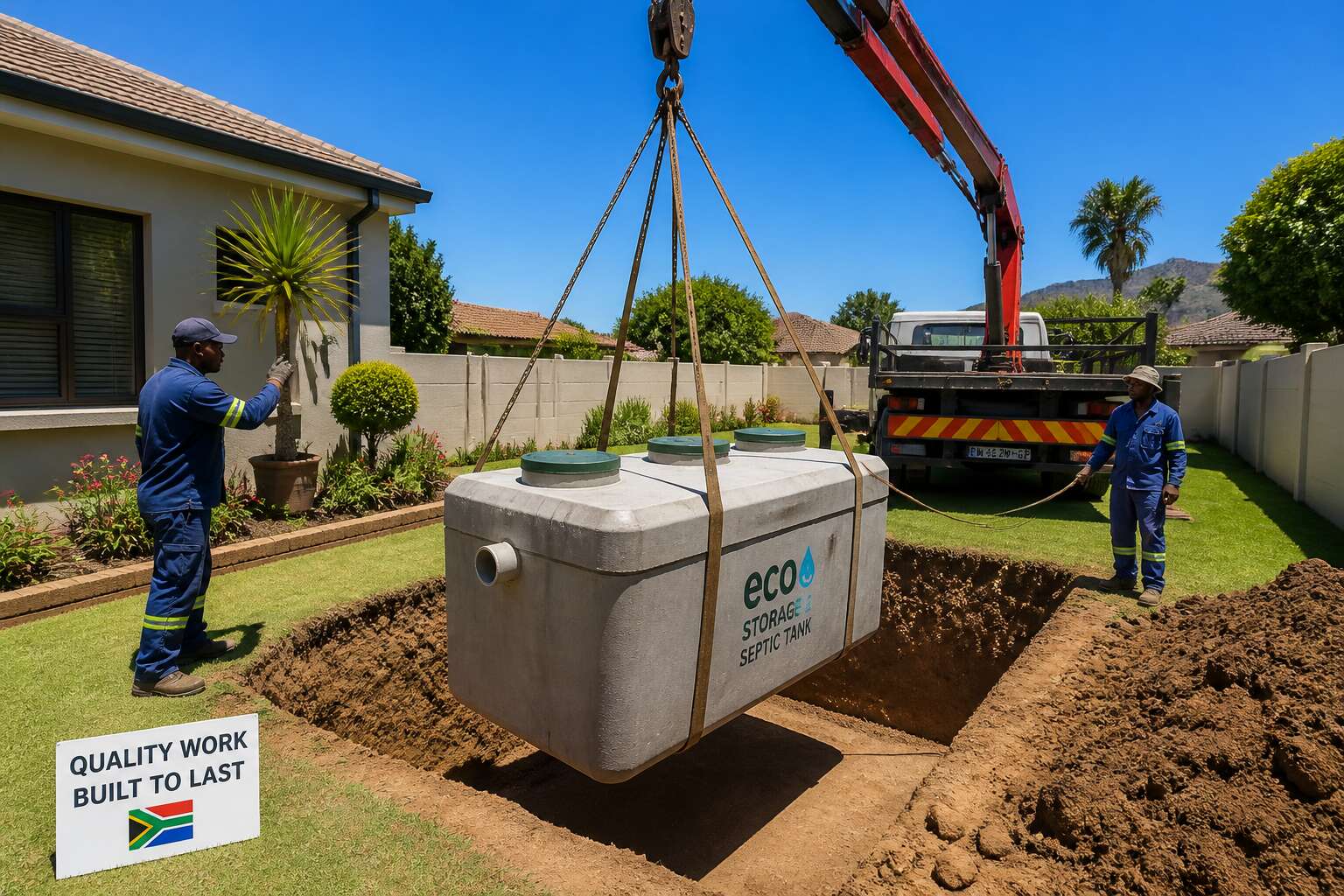
For most buyers, the material decision gets less attention than the price tag, and that is a costly mistake. Concrete, plastic, and fibreglass each respond to local soil and climate differently. Concrete is durable but heavy, often requiring a crane on site. Plastic resists corrosion but can buckle under heavy overburden. Fibreglass is lightweight and strong, yet vulnerable to poor backfill practices.
- Concrete: best for high groundwater areas but prone to cracking during transport
- Plastic: affordable and easy to handle, check the wall thickness carefully
- Fibreglass: a solid all rounder, but only with experienced installers
Price alone will not reveal the real cost. Delivery fees, installation complexity, and expected lifespan all change the final figure. In my experience, the cheapest option often fails sooner. Before paying for any septic tank for sale south africa, compare the full package rather than the price alone.
Durability and Lifespan in South African Conditions
The soil in the Karoo behaves nothing like the clay of Gauteng. That matters because a septic tank for sale south africa might be engineered for one region, while you are installing it in another. In my years observing household systems, the tanks that fail early are rarely the cheapest ones. They are the ones whose owners ignored local geology.
Durability in South Africa means surviving intense summer storms, dry crusts that shift the ground, and the occasional tree root sensing moisture from afar.
– Check wall thickness relative to the acidity of your local soil
– Confirm the lid can bear the weight of a bakkie or tractor
– Ask about UV resistance if any portion will sit exposed
A tank that lasts thirty years in Mpumalanga may last ten in the Northern Cape. That gap is not brand luck. It is preparation. Once the hole is dug, the decision is sealed.
Site Assessment and Soil Type Considerations
The ground beneath your plot holds the verdict before you even compare prices. A septic tank for sale south africa may be perfectly engineered, but if your site sits on dolomite or a high water table, installation becomes a separate problem entirely. I have walked properties where the perc test revealed drainage so poor that the cheapest tank became the most expensive mistake. That is why any septic tank for sale south africa should be evaluated against your specific site, not against the brochure.
Site assessment should include:
- Percolation rate of the soil at your specific depth
- Seasonal water table fluctuations after heavy rain
- Distance to boreholes, wells, and neighbouring boundaries
Soil type determines how fast effluent moves and how well the system breathes. Sandy soils drain quickly but may need extra filtration. Clay soils hold water and can drown the system. Locate the tank before you select the unit, and match the sizing to the absorption field.
Environmental Impact and Eco-Friendly Choices
Once the site assessment is complete, attention turns to the local supply chain. A septic tank for sale south africa purchased from a nearby producer lowers transport emissions and keeps money in the regional economy. Local manufacturers build for local conditions, which means better compatibility with South African soils.
Environmental impact goes beyond the tank material. Operational choices matter more than the box itself!
- An effluent filter protects the drainage field from premature clogging.
- A two chamber design settles solids more effectively than a single compartment.
- A riser lid simplifies inspection, which encourages regular maintenance.
The most eco-friendly option is the one that receives proper care. It prevents groundwater contamination and soil degradation. It also avoids the carbon cost of replacing a failed unit.
Warranty and After-Sales Support from Suppliers
A warranty means little if the supplier disappears when you need them. When you search for a septic tank for sale south africa, the paperwork deserves the same scrutiny as the tank itself. Many buyers compare dimensions and price, yet rarely ask what happens when a unit arrives cracked or fails within two years.
I have watched installations stall because a supplier could not answer a simple phone call. Any septic tank for sale south africa should come with a clear warranty period, defined replacement terms, and technical backup. Ask whether they stock spare parts like baffles and riser lids.
The evaluation often comes down to:
- Warranty coverage and duration
- Callout response time
- Availability of spare parts
- Claim handling process
A supplier who answers questions quickly on a Tuesday afternoon will likely do the same when you need urgent assistance. That reliability protects your investment long after the excavator leaves.
Transport and Delivery Logistics Across Provinces
The distance from Johannesburg to Cape Town stretches 1,400 kilometres, yet some suppliers act astonished when a delivery takes longer than a long weekend. Transport logistics across provinces is where many purchases stumble. A septic tank for sale south africa is no small parcel. It demands a flatbed truck, often a crane, and a driver who understands rural gravel roads.
Review these factors before you commit:
– Delivery lead times to your province
– Offloading equipment available at your site
– Access roads and gate widths for the delivery vehicle
– Additional freight charges beyond major metros
I have watched buyers in Limpopo assume free delivery covers their plot. It rarely does. Ask whether the quoted septic tank for sale south africa price includes transport to your gate or merely to the nearest town depot. That distinction can cost thousands of rand and several days of waiting.
Sizing Your System for Household Needs
Estimating Daily Wastewater Flow per Person
A single person generates roughly 150 to 200 litres of wastewater every day. That estimate dictates the capacity you need for your household system. Underestimating this figure leads to frequent pumping and system failure.
Your household flow changes throughout the day. It arrives in distinct surges. Consider the typical daily contributions:
- Toilet flushes: 12 to 15 litres per use.
- Showers: 10 to 15 litres per minute.
- Laundry: 50 to 60 litres per full load.
Add those volumes for each resident. I multiply the total by 1.5 to cover the required retention period. A weekend braai can spike that flow by a hundred litres. A couple with two children often needs a 3,000 litre unit. Suppliers list these capacities on any septic tank for sale south africa. Matching the tank to your daily output prevents premature failure.
Number of Bedrooms and Occupancy Guidelines
A three bedroom home in South Africa tells a story about its occupants, and that story determines the right septic system. Municipal guidelines allocate roughly 2.5 people per bedroom when calculating capacity. That baseline matters because a septic tank for sale south africa typically comes in standard volumes, and matching the unit to your actual headcount prevents overloading.
Common sizing benchmarks:
– One bedroom: 1,500 to 2,000 litre tank
– Two bedrooms: 2,500 to 3,000 litre capacity
– Three bedrooms: 3,000 to 4,500 litres
– Four or more bedrooms: 5,000 litres plus
These figures assume typical occupancy. A six bedroom farmhouse with only two permanent residents can still choose a smaller unit, but guest use might justify the larger size. Size for the people who live there, not just the bedrooms on paper. That approach ensures any septic tank for sale south africa you select matches your daily reality.
Peak Usage Considerations for Holiday Rentals
December in Paternoster transforms the coast. A sleepy fishing village becomes a holiday hub, and sewage systems feel the strain. The same happens in Clarens, along the Wild Coast, and across the Cape Winelands. A rental that hosts four people most of the year might welcome fourteen during peak weeks. When you examine a septic tank for sale south africa, size for that December crowd, not the quiet May average.
Holiday homes create surges. Laundry loads multiply. Showers run back to back. A tank that handles a gentle Tuesday may struggle by Saturday night. For rental properties, reserve capacity is everything!
Consider these factors when choosing:
- Guest turnover and booking density
- Consecutive weeks of full occupancy
- Drainage field absorption capacity
I have seen too many owners underestimate their peak load. A larger septic tank for sale south africa costs marginally more upfront but protects your rental income from a costly overflow disaster.
Overflow and Storage Capacity Requirements
Household sizing is a game of averages, but sewage does not care about your spreadsheet. A septic tank for sale south africa might appear a simple concrete box, yet every litre that enters must settle or move on. Overflow occurs when storage capacity runs out.
Your household needs shift with the seasons. A three bedroom home in Gqeberha becomes a six person residence when the in laws visit. The washing machine runs twice daily. The guest bathroom becomes a busy facility. That is when you discover whether your tank has reserve volume or just enough space to disappoint you.
- Daily water usage per person
- Number of high volume appliances
- Frequency of heavy laundry days
- Soil drainage speed on your property
Every litre entering the tank must either settle or escape. If the drainage field is slow, the tank fills faster. Smart buyers choose a septic tank for sale south africa with storage capacity that exceeds their worst week, not their calmest month.
Planning for Future Expansion or Property Growth
Sizing for the future requires honesty about property growth. A plot that holds one home today may host a granny flat or rental unit in five years. Each new structure sends more wastewater into the ground. A tank sized for current occupancy only postpones the problem.
Consider what your property might become:
– Additional bedrooms or a second dwelling
– A home office with a bathroom
– Extended family moving in permanently
Municipal approval processes often demand bigger tanks anyway. The ground around your tank is only dug up once. That is the moment to install capacity that matches your long term plans. A septic tank for sale south africa with future capacity is a practical purchase.
Cost Breakdown and Budgeting Smartly
Average Price Ranges by Tank Material and Capacity
In South Africa, the price of a septic tank can swing by more than R10,000 based purely on material. A concrete 2,500 litre unit might set you back R4,500, while a plastic equivalent could cost R8,000. Capacity pushes costs further: 5,000 litre tanks often exceed R12,000. So, when you search septic tank for sale south africa, you need more than a random quote.
Budgeting smartly means accounting for delivery, excavation, and installation. These add 30% to 50% to the base price. To compare fairly, look at these average price ranges:
- Concrete 2,500L to 5,000L: R4,500 to R11,000
- Plastic 2,500L to 5,000L: R7,000 to R15,000
- Fibreglass 2,500L to 5,000L: R9,000 to R18,000
Remember, the cheapest option often demands more frequent pumping, so weigh long term costs against the sticker price.
Hidden Costs: Excavation, Installation, and Plumbing
When you see a septic tank for sale south africa, the quoted price rarely tells the full story. Excavation alone can consume R2,000 to R5,000 depending on soil hardness and access. Installation and plumbing connections add another R3,000 to R8,000, especially if the tank must sit below the frost line or far from existing pipes.
- Digging the hole: R1,500 to R4,500
- Sand or gravel bedding: R500 to R1,200
- Inlet and outlet pipework: R1,000 to R2,500
- Pumping and testing after installation: R800 to R1,800
These costs vary wildly across provinces. A rural site with rocky ground might double your excavation budget, while a sandy plot near the coast keeps it low. Always request a site-specific quote before committing, because the cheapest tank becomes expensive when hidden fees appear.
Comparing Quotes from Different South African Suppliers
Price quotes for a septic tank for sale south africa can differ by as much as 40% for the same model. I have seen suppliers quote R8,500 for a 3000L concrete tank while their competitor down the road asks R12,000. The tank is identical! The difference hides in transport surcharges, VAT treatment, or a handling fee that appears only on the final invoice.
When comparing quotes, look beyond the headline number. A reputable supplier breaks down delivery, offloading, and VAT line by line. Vague quotes hide costs, and those costs will surface later.
Consider these factors when evaluating each supplier:
– Delivery radius and per-kilometre charges
– Offloading requirements, such as a crane or skid steer
– Payment terms and early settlement discounts
– Whether the quoted price includes VAT and the tank lid
The cheapest quote from a distant supplier rarely stays cheapest once you add two hours of driver waiting time.
Financing Options and Bulk Purchase Discounts
The purchase price for a septic tank for sale south africa only opens the negotiation. Excavation, bedding material, and the plumber’s callout fee routinely double the initial quote. I have watched homeowners budget R20,000 and later stare at a R38,000 invoice because they forgot the crane hire. That gap is avoidable when you price every stage separately.
Suppliers structure payments differently across regions, and the options usually come down to three arrangements:
1. 50% deposit with 50% on delivery
2. Interest free lay-by over 90 days
3. Full payment with a 5% early settlement discount
Bulk purchases change the arithmetic entirely. Developers ordering five tanks or more can push for 15% per unit discounts and free transport within a 50 kilometre radius. Ask about financing before you settle on a model. A septic tank for sale south africa from a larger supplier may carry a higher sticker price, yet its payment terms can make it the more affordable option once cash flow is counted.
Long-Term Savings versus Ongoing Maintenance Expenses
A septic tank for sale south africa is a bargain until the drain field fails. I have watched homeowners celebrate a low upfront price, then face a R12,000 pump-out within two years. Budgeting smartly means separating the purchase from the years of upkeep.
Long-term savings come from correct sizing and material choice. A concrete tank lasts decades if maintained. The ongoing expenses are not optional. They follow a predictable sequence:
- Annual inspection: R800 to R1,500
- Pump-out every 3 to 5 years: R2,500 to R4,000
- Biological additive doses: R150 per month
That sequence dwarfs the initial cost. Many owners forget the system demands a monthly allowance. The arithmetic is simple: a R25,000 tank plus R30,000 over fifteen years of care. Ignore that, and replacement arrives early!
Regulatory Compliance and Approval Processes
National Building Regulations and SANS Codes
The National Building Regulations do not bend for convenience. Every septic tank for sale south africa must comply with these rules and the accompanying SANS codes. The local municipality issues approval only after a full plan submission. This is not a formality. Skipping it can mean severe fines or a forced system removal.
SANS 10400-P governs drainage and sewerage design. Your tank must meet these standards to receive a Certificate of Occupancy. An engineer or accredited inspector should verify the design before installation.
- Submit scaled plans and site layout to the municipality.
- Include percolation test results and tank specifications.
- Await approval before any excavation begins.
Some provinces add extra requirements, like environmental impact screenings near wetlands. Confirming with your local authority beforehand is essential. Ignorance of these processes costs homeowners dearly.
Municipal Permits and Septic Tank Registration
Municipal permits do more than rubber stamp your plans. They legally register the septic tank for sale south africa on your property’s records. This registration affects future property transfers, insurance claims, and municipal service agreements. An unregistered tank can become a legal obstacle when you sell your home.
The application process focuses on the tank itself, not just the drainage layout. Your municipality will verify the manufacturer’s compliance certificate and confirm the tank’s venting, access points, and setback distances from boundaries and boreholes. The process typically involves:
- Submitting a completed application form with your erf number and property description
- Paying the prescribed inspection fee to the local authority
- Booking a pre installation inspection date with the building control officer
The final approval confirms that your specific septic tank for sale south africa meets the conditions of the site. Keep the approved permit on file, as inspectors may request it during routine compliance checks in later years.
Environmentally Sensitive Areas and Special Restrictions
Properties bordering wetlands, watercourses, or dolomite zones introduce another layer of scrutiny. Municipalities classify these as environmentally sensitive areas, which triggers additional assessments under the National Environmental Management Act. Your proposed septic tank for sale south africa may be acceptable, but only with a freshwater impact study and a stricter distance requirement from any seasonal water flow.
Special restrictions also emerge from the local bioregional plan. Councils may impose conditions such as:
- Limits on effluent discharge volumes in designated catchment areas
- Prohibitions on certain tank materials over high groundwater tables
- Mandatory secondary treatment for properties near conservation corridors
Environmental consultants routinely interpret these requirements for property owners. Their fees are smaller than the cost of retrofitting a noncompliant system.
Health and Safety Standards for On-Site Wastewater Treatment
The quiet work of a septic system may seem ordinary, but provincial health departments view it with forensic care. On-site wastewater treatment in South Africa demands compliance with health and safety standards that extend beyond the tank itself. Installers must verify that the chosen septic tank for sale south africa meets certification thresholds for structural soundness and effluent containment.
Health inspectors increasingly require documented evidence of:
- pathogen reduction certification
- watertight integrity testing
- setback distances from drinking water sources
These requirements prevent the silent migration of untreated effluent through sandy soils, where contaminants travel further than most homeowners realise. When evaluating a septic tank for sale south africa, ask suppliers how their systems fare under these health checks. A compliant installation is not merely a checkbox exercise. It is the difference between a system that protects the community and one that quietly undermines it.
Working with Certified Installers and Engineers
Nothing slows a project like a municipal approval that arrives with a red stamp and a list of demands. The regulatory path for a septic tank for sale south africa depends on who signs off the design and installation. Certified installers understand local bylaws in ways that general contractors often miss.
Engineers add another layer. They verify structural calculations, groundwater protection measures, and compliance with SANS codes. Municipalities usually require a certificate of compliance before the system can operate. Some provinces even demand engineer sign-off on the tank’s placement relative to boundary lines and drainage areas.
The approval process commonly involves:
– A site-specific design review
– Submission of engineer’s drawings
– Inspection of excavation before lowering the tank
– Final sign-off after backfilling
Working with certified professionals is the difference between a smooth approval and a stalled project. A septic tank for sale south africa only becomes legal once the paperwork matches the physical installation.
Consequences of Non-Compliance and Penalties
Skipping compliance carries direct financial weight. Municipalities across South Africa impose fines that escalate monthly while the system remains unregistered. In severe cases, inspectors can order the tank to be exhumed and reinstalled at the owner’s expense, doubling the initial outlay.
Groundwater contamination escalates the matter. If an unauthorised septic tank for sale south africa leaks into a neighbouring water source, the property owner carries the liability. Municipalities, provincial health departments, and affected neighbours can all launch legal proceedings.
Penalties commonly include:
- Monthly fines that compound until compliance
- Legal costs from enforcement actions
- A directive to cease using the system
- Criminal charges for deliberate neglect
Property sales suffer as well. When a home with an unregistered system goes on the market, the transfer of title is often delayed until the septic tank for sale south africa receives sign-off. Buyers and bond providers will not proceed without the certificate.
Installation Practices That Ensure Longevity
Pre-Installation Groundwork and Excavation Tips
Most septic system failures trace back to one moment: the day the excavator breaks ground. A tank that sits crooked in a poorly prepared trench will shift, settle, and crack. Before you buy a septic tank for sale south africa, assess the soil’s bearing capacity. Clay-heavy ground expands when wet and can crush concrete tanks. Sandy soils drain well but need extra compaction.
The excavation must be level and oversized by twenty centimeters per side. Remove tree roots and debris. Sharp rocks become pressure points. Check the water table depth; if groundwater rises near the base, anchor the tank.
Before backfilling, run this checklist:
- Verify the tank sits level.
- Align inlet and outlet with the plumbing run.
- Backfill with sand or fine gravel, not large stones.
I’ve seen tanks fail in under three years from skipping this step. A properly seated tank lasts decades. That difference starts with the dirt beneath it.
Positioning the Tank Away from Water Sources and Structures
A septic tank for sale south africa can perform flawlessly for decades, but only if it sits in the right place. I’ve seen homeowners bury a tank too close to a borehole, and the consequences are not pretty! The National Building Regulations require a minimum setback of 1.5 meters from buildings and 3 meters from water sources, but these are minimums, not recommendations.
Distance is your protection. A leak or overflow near a well can contaminate drinking water. A tank pressed against a foundation can saturate the soil and undermine the structure over time.
- Keep the tank at least 10 meters from any borehole or spring
- Maintain 3 meters from property boundaries and buildings
- Allow 6 meters from swimming pools and irrigation systems
- Avoid areas with high seasonal water tables
When you purchase a septic tank for sale south africa, plan the layout before the concrete cures. A misplaced tank is a costly mistake that no amount of maintenance can fix.
Connecting Inlet and Outlet Pipes Correctly
The connection points where pipes enter and exit a septic tank are its most fragile interface. I have seen installers underestimate the gradient between the house and the tank, creating a system that stands still instead of flows. The inlet pipe must lead wastewater at a gentle slope, enough to move solids but not so steep that liquids outpace debris. The outlet pipe, fitted with a tee or baffle, protects the drainage field by capturing the scum layer.
Consider the flow path as a sequence:
1. Wastewater enters the inlet and drops below the liquid level.
2. Solids settle at the bottom, while lighter materials rise.
3. Clarified liquid exits through the outlet near the top.
4. Any backup or overflow signals a failure in this sequence.
When you purchase a septic tank for sale south africa, verify that the inlet and outlet heights align with your site’s plumbing layout. An incorrectly fitted outlet pushes untreated effluent into the soil, a hazard that SANS codes do not tolerate. Measure the pipe angles, seal every joint, and let gravity do its quiet work. These steps make or break any septic tank for sale south africa.
Backfilling and Compaction Techniques
Proper backfilling is the part of installation no one admires until the tank shifts. A septic tank for sale south africa is only as good as the soil that hugs it. I have seen tanks crack because the crew dumped clay with stones and called it a day.
The ground around the tank must be filled in layers. Each layer should be around 150 millimetres deep, and compacted gently by hand or with light equipment. Heavy machinery directly over the tank is a recipe for disaster.
- Backfill with clean sand around the sides.
- Compact each layer before adding the next.
- Check for voids or air pockets.
- Keep the tank’s inspection openings accessible.
When you select a septic tank for sale south africa, remember that drainage and compaction go together. A tank that sits loose will move with groundwater, and that movement breaks seals.
Ventilation and Access Lid Placement for Future Servicing
Ventilation prevents gas buildup inside the tank. Without airflow, pressure distorts seals and pushes effluent backward. When you select a septic tank for sale south africa, inspect the vent arrangement before installation. The access lid deserves equal attention. I have watched service crews leave when the lid was buried under soil. If the access point sits beneath half a metre of dirt, every maintenance call becomes an excavation task.
Position the lid where a pumper truck can reach it without additional pipework. Use a riser to bring the access point to ground level. Route the vent pipe away from living areas and air conditioners.
– Confirm the lid opens freely without tools.
– Choose a lid rated for the expected vehicle weight.
– Record the exact position on your property plan.
A well placed lid shortens service visits. Proper ventilation extends the system’s lifespan. These decisions matter more than the initial septic tank for sale south africa price.
Routine Maintenance and Troubleshooting Guide
Scheduled Pumping and Sludge Removal Intervals
The golden rule of septic ownership is simple: sludge waits for no one. That’s why a septic tank for sale south africa should come with a maintenance schedule attached. Most residential tanks need pumping every three to five years, though household size shifts that interval dramatically. A family of four producing 1,200 litres of wastewater daily will fill a 3,000 litre tank much faster than a couple using the property on weekends.
Annual scum layer checks through the access lid prevent costly surprises. If the scum sits within 50mm of the outlet tee, book a pump-out promptly. Fats, oils, and non-biodegradable items accelerate sludge accumulation. Mark your access point clearly, because burying it unnoticed turns routine servicing into an expensive guessing game.
Signs of Blockages, Leaks, or System Failure
Every septic tank fails eventually, but most failures announce themselves. The first signs are subtle: a sink draining slower, a toilet bubbling when the washing machine runs, grass growing greener over the drain field. Trust me, these are not coincidences. They are your system asking for attention.
When the ground around your septic tank for sale south africa turns spongy or releases a lingering odour, you have moved past maintenance into urgent territory.
- Gurgling sounds from plumbing after flushing
- Wastewater backing up into tubs or showers
- Bright green patches over the soakaway
Each symptom carries its own message. A septic tank for sale south africa installed correctly still depends on daily habits. Flushing wet wipes or pouring cooking oil down the drain creates blockages no pump can reverse. Leaks in the tank walls allow untreated effluent to contaminate groundwater, and that risk escalates with every passing week!
Bacterial Additives: Do They Really Work?
Every septic tank for sale south africa runs on a living colony of bacteria. That is the engine of the system. Additives promise to bolster this colony, but the evidence is mixed. Most biological additives are harmless, yet a healthy tank already produces the bacteria it needs! Enzyme cleaners poured down the drain will not revive a failing drain field.
Routine maintenance is concrete: pump the sludge on schedule, moderate water use, and keep harsh chemicals away from the pipes. I tell homeowners to invest in a pump-out invoice rather than unproven powders.
When troubleshooting slow drainage, check the inlet filter first. A clogged filter causes more grief than a missing additive ever will.
Seasonal Care for Heavy Rain and Drought Periods
Rainfall extremes in South Africa force septic systems to adapt quickly. After heavy storms, walk the drain field and check for pooling water or soggy patches. Effluent that cannot percolate through saturated soil will surface or back up into the house. Redirect roof gutters and stormwater away from the soak area before the next downpour arrives.
Drought creates the opposite hazard. Shrinking soil pulls away from pipes, opening fissures for untreated wastewater to migrate toward groundwater. Households under water restrictions often flush less, which alters the system’s flow. A septic tank for sale south africa needs regular input to keep bacteria active. If the tank goes dormant, sludge hardens and pumping becomes more difficult.
Monitor how the system responds during each season and adjust water habits accordingly.
Safe Waste Disposal Habits to Protect the System
Routine maintenance begins with knowing what enters the tank. Every flush carries material that either decomposes or settles. Schedule an annual inspection of lids, baffles, and pipe connections. A septic tank for sale south africa performs reliably when components remain intact.
Troubleshooting requires a methodical approach. Keep a log of pumping dates, water usage changes, and any unusual odours. Compare readings across years to spot patterns before failure occurs.
Safe waste disposal habits protect the biological balance:
- Never flush wet wipes, sanitary products, or nappies
- Keep cooking oils and grease out of drains
- Avoid harsh chemicals that kill beneficial bacteria
- Take medications and paints to hazardous waste facilities
The tank depends on steady bacterial activity to break down solids. Choosing a septic tank for sale south africa means committing to these attentive habits.
When to Call a Professional vs DIY Repairs
Routine maintenance reveals who treats their septic tank like a hobby project and who treats it like infrastructure. A septic tank for sale south africa may come with a warranty, but no warranty covers a homeowner’s enthusiastic misadventures with a plunger and good intentions.
Professional intervention becomes necessary when sewage backs up into the house, drain fields turn into wetlands, or the access lid refuses to cooperate with your spade. DIY repairs make sense only for superficial issues: replacing a cracked lid, tightening loose pipe connections, or documenting strange gurgling noises for the plumber.
Some things you should never DIY:
Pumping the tank yourself
Cutting into buried pipes without locating them first
Ignoring structural damage because the exterior looks fine
Finding Reliable Suppliers and Avoiding Pitfalls
Researching Local Manufacturers and Importers
Finding a septic tank for sale south africa that is reliable takes effort. The options can feel endless. Some suppliers are seasoned local manufacturers. Others are importers with no physical footprint beyond a website. The difference matters when problems arise.
A trustworthy supplier answers direct questions about production methods and material quality. They welcome site visits or factory tours. Importers often cannot match that transparency. Freight delays, currency swings, and missing spares become your burden after the purchase.
When you evaluate a septic tank for sale south africa, check these details before you commit:
– SANS or SABS certification on the tank
– A verifiable physical address
– References from recent buyers
One bad supplier costs more than a good tank saves. Verify everything.
Reading Reviews and Asking for Referrals
Anyone can post a five star review five minutes after the truck pulls away. The real test comes six months later, when the ground has settled and the system is working under real household pressure. That is why referrals matter more than online ratings.
I always ask suppliers for a shortlist of clients who bought a septic tank for sale south africa in the past two years. Call those people! Ask about delivery delays, installation surprises, and whether the supplier answered the phone after the invoice was paid.
Google reviews can help, but read the negative ones closely. One complaint about a late truck may be a courier issue. Several complaints about cracked lids or missing baffles point to a pattern.
Verifying Product Certifications and Test Results
Finding a reliable supplier starts with asking for proof, not promises. When I search for a septic tank for sale south africa, I request the SANS certification and any SABS test documentation before we discuss price. A reputable manufacturer shares these documents freely. One that hesitates usually has a reason.
The certification tells you whether the tank meets national standards for structural integrity and wastewater containment. Test results reveal load-bearing capacity and resistance to corrosive soil conditions. I have seen imported units fail precisely because they lacked local testing.
Here is what I check in the paperwork:
- Valid SANS approval number and test date
- Independent laboratory reports, not just manufacturer claims
- Confirmation that the specific model matches the certified design
Buying a septic tank for sale south africa without verified documentation is a gamble. The ground will settle, the system will load up, and only then will you know if the supplier told the truth. Certification is the only early warning system that works.
Beware of Cheap Imitations and Substandard Materials
Finding a dependable supplier takes more than scanning online listings for a septic tank for sale south africa. The cheapest option often leads to the most expensive failure. Substandard tanks may use recycled plastic, weak concrete mix, or insufficient steel reinforcement.
I visit suppliers and inspect their manufacturing process. A reliable supplier will show you the production floor, not just a brochure! Beware of imitations that mimic reputable brands. Check the wall thickness and the quality of the joints. Look for these warning signs:
- Uniformly low prices across every capacity
- Walls that flex under light pressure
- Rough edges or visible air pockets in concrete
These flaws cause cracking, leaking, and premature collapse. A certified tank costs more upfront but protects your property for decades.
Negotiating Delivery Windows and Installation Bundles
Securing a reliable septic tank for sale south africa starts with visiting the manufacturer’s yard unannounced. I check the wall thickness on concrete units and look for honeycombing on the surface. Avoid suppliers who cannot produce SANS certification or who dodge questions about steel reinforcement.
Delivery negotiations require specificity. A quoted price may exclude offloading or crane hire. I always request a date range in writing and a penalty clause for late arrival. Installation bundles can save you thousands, but only if the contract lists every excavation and backfill step.
- Inspect the actual tank before paying a deposit
- Confirm whether the delivery truck has a crane
- Ask for bundled installation quotes from two suppliers
Linking installation to your septic tank for sale south africa purchase keeps a single party accountable for site damage.
0 Comments