
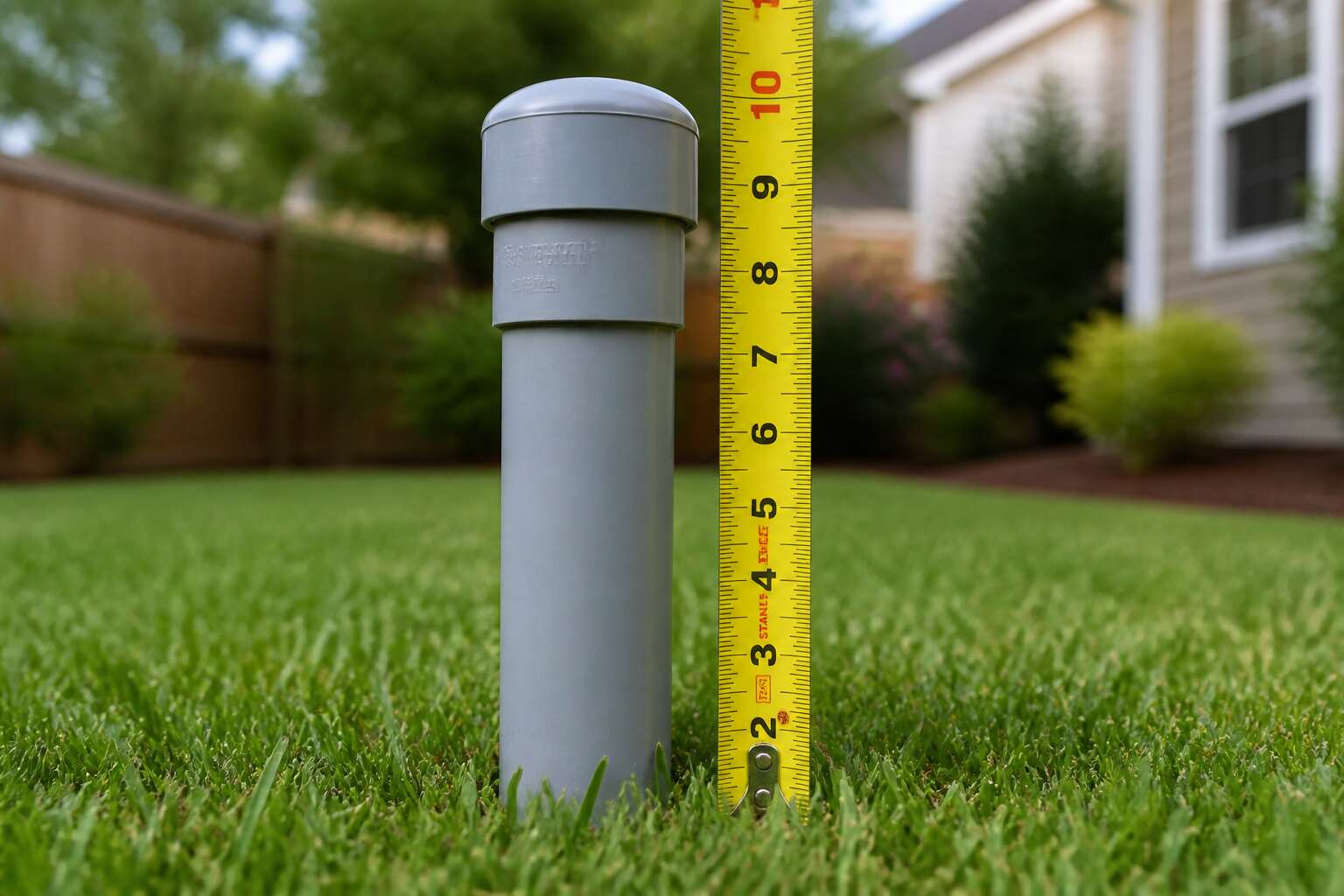
Understanding Septic Tank Venting Basics
Purpose of a Septic Vent Pipe
Silence is not the natural state of a healthy septic system. A working tank breathes, and that rhythmic exchange of air is governed by a single, unassuming component: the vent pipe. Its fundamental role is to regulate atmospheric pressure inside the tank, ensuring that the system does not become a vacuum or a pressure cooker. Without this essential outlet, the natural flow of effluent would slow to a crawl, and the internal chemistry would falter.
As waste decomposes, it generates gases such as methane and hydrogen sulfide. These gases must be directed safely upward and away from your property. The vent pipe functions as the system’s primary exhaust, carrying these malodorous and potentially hazardous fumes into the open sky. The septic tank vent pipe height is not merely a suggestion; it is a calculated measure to protect residents from toxic exposure and to stop noxious odors from pooling near windows or patios.
Beyond safety, the vent is crucial for the biological efficiency of your tank. The anaerobic bacteria that break down solid waste require a stable environment. When air pressure fluctuates wildly, the digestion process slows, and scum layers can build up at an alarming rate. Consider the distinct purposes:
1. Releasing gas pressure generated by decomposition.
2. Introducing fresh air to support aerobic bacteria in the upper layer.
3. Preventing siphoning of water from the tank’s outlet.
4. Allowing for the smooth descent of wastewater from the house.
Each function contributes to the overall longevity of the system. The correct septic tank vent pipe height ensures that these processes occur without interference from ground level elements or backwash. It is a quiet guardian, working continuously to maintain a delicate balance between the underground world and the atmosphere above.
How Septic Venting Works
Most homeowners never think about the physics happening beneath their lawn, yet a septic system operates on a delicate equilibrium of air pressure. When wastewater surges from the house, it displaces the air inside the tank. That displaced air needs a clear escape route, and the septic tank vent pipe height determines how efficiently that route functions. If the top of the pipe sits too low, ground debris, rainwater, or even burrowing insects can obstruct the opening. This creates a bottleneck that slows the entire drainage process.
The venting mechanism relies on a continuous column of air moving upward. As effluent enters the tank, it pushes a pocket of gas ahead of it. That gas travels up the vent stack and exits into the atmosphere. Meanwhile, fresh air must be drawn back into the tank to replace the volume lost. This exchange happens passively, driven by the natural difference between indoor and outdoor air density. The septic tank vent pipe height ensures this passive airflow remains unobstructed and consistent.
Several factors influence how the venting system performs in practice.
- Wind exposure at the pipe’s outlet can either assist or inhibit air withdrawal, depending on the vent cap design.
- Seasonal temperature shifts change air density, altering the rate of gas exchange.
- Local rainfall patterns may cause water to pool around the pipe base if the height is insufficient.
The pipe’s height also affects how gases disperse once they leave the system. A vent that terminates too close to ground level allows heavy gases, like hydrogen sulfide, to settle near patios and open windows. Raising the outlet higher encourages those gases to mix with atmospheric air quickly, diluting them before they reach living spaces. Every installation requires a specific measurement to balance these dynamics, and that measurement is the septic tank vent pipe height. When the height is correct, the system breathes silently, and the underground digestion process proceeds without interruption.
Signs of Poor Ventilation
Understanding Septic Tank Venting Basics begins with a simple measurement. The septic tank vent pipe height sets the opening above ground, where air can flow freely. Installers must consider drainage, wind, and local building requirements. Even a few centimetres too low invites soil and insects into the pipe.
Signs of Poor Ventilation are often subtle but unmistakable:
- Bubbles appearing in toilets after flushing
- Foul smells wafting from drains
- Water draining sluggishly without plumbing blockages
These symptoms point to inadequate septic tank vent pipe height. Correct that height, and the pressure equalises. Ignore it, and the entire system strains. I have seen homeowners mistake these signs for clogs, but the vent is the true culprit.
Ideal Height for Septic Vent Pipes
Standard Height Requirements by Building Code
The quiet work of a septic system happens underground, but the vent pipe is the part that reaches for the sky. In South Africa, the septic tank vent pipe height follows SANS 10400-P, which requires the opening to sit at least 2 meters above any window or door within a 3 meter radius. That clearance keeps gases above the living space and clears the roof line.
For pitched roofs, the opening should extend at least 600 mm above the ridge. Other conditions can raise the septic tank vent pipe height above that minimum:
- The slope of the roof and the distance to the ridge
- Nearby trees or walls that deflect the rising gases
- Open windows on a second story that sit close to the pipe
I have seen homes where the pipe barely clears the fence, and the smell follows every breeze. When the pipe sits too low, the odor lingers around the yard. The code numbers matter.
Factors That Influence Vent Pipe Height
The ideal septic tank vent pipe height is rarely the legal minimum. Building codes establish a floor, not a target. Homeowners who stop at the baseline often find that their nose becomes the real inspector.
Each property presents its own obstacles that push the vent upward:
- Walls and fences that trap rising gases at nose level
- Tree canopies that deflect odours sideways
- Outdoor entertaining areas downwind of the pipe
A vent that clears the roof line may still sit too low for a courtyard. The septic tank vent pipe height must account for local wind patterns and the exact position of windows, terraces, and braai areas. The smell follows the path of least resistance, which is rarely the path you planned.
Residential vs. Commercial Vent Height Standards
The gap between residential and commercial vent standards is wider than most people imagine! For a home, the septic tank vent pipe height may clear the roof by a modest margin. For a commercial site, the same height could fail inspection.
Consider the differences:
- Residential systems serve a single household, so odour dispersion is simpler.
- Commercial systems handle higher flow rates and require greater separation from windows, air intakes, and pedestrian areas.
I have seen engineers specify a septic tank vent pipe height of three metres for a restaurant, while a neighbouring house needed only one. The volume of wastewater and the proximity of people dictate the real number.
Installation and Placement Guidelines
Choosing the Right Vent Pipe Material
An audit across Limpopo reveals that a third of septic tank odours come from a broken vent collar, not a real blockage. I secure the position before I ever worry about the septic tank vent pipe height! That is my final mark.
I mount the vent on the cooler side of the tank. A 45 degree elbow bends the turns away. The outlet is set into a concrete joint with a galvanised bracket. A tractor tyre or a hoof will not shift it.
Material matters. A standard PVC is fine for a dry zone. But I choose HDPE for acidic or brackish water. My checklist:
- HDPE for an ultra saline flat
- Rigid polypropylene for a floodplain
- UV stable PVC for a fierce summer.
Positioning Relative to Roofs, Windows, and Doors
Positioning a septic vent demands more than a tape measure. The septic tank vent pipe height must clear the roof ridge, but the open window beside the bathroom presents the greater risk. Odours from a poorly placed outlet slip straight back into the living space. Across the Mpumalanga highveld, I rely on three clearances to prevent this nuisance:
- Hold the vent outlet at least 3 metres away from any window or door
- Rise the pipe 600 millimetres above the roof line
- Face the vent away from the prevailing wind
A roof with a deep overhang changes the equation. The vent needs to project past the eaves so rising air does not curl under the gutter. South African thunderstorm downdrafts create strong turbulence, so a vent crowded against a parapet wall will struggle. Measure from the opening itself, not the roof surface. That distinction keeps the septic tank vent pipe height accurate and the air clear.
Common Installation Mistakes to Avoid
There is a wide gap between knowing the septic tank vent pipe height on paper and living with a vent that actually works. A Gauteng heatwave can stress a poorly cured joint, so every connection must be solvent welded correctly and given time to set before the system carries load. The pipe also needs a bracket within every metre, firmly anchored to a rafter or wall, not merely resting on a roof tile.
Common mistakes repeat themselves on sites around the country:
- Raising the pipe to the correct height but failing to clamp it against wind sway
- Leaving a stack unsupported over a long span, so the weight slowly pulls the fittings loose
- Cutting the opening with a grinder and leaving rough burrs that trap sludge and restrict airflow
The pipe must rise without sagging, because a bent vent changes the draw. The septic tank vent pipe height matters, yet the route and the fixings matter just as much.
Safety Considerations During Installation
The most critical moment happens after the last bolt is tightened. Roof work under the highveld sun is unforgiving, and the septic tank vent pipe height must match the bylaw, but installation decides whether that number holds. I always run a string line from the tank outlet to the roof penetration, because a pipe that drifts off plumb will compromise the draw.
For placement, the vent must rise vertically through a collar that is fully flashed. Work on windless mornings so the solvent welds cure without dust. The safety routine is non-negotiable:
- Test the ladder footing on solid ground before every climb.
- Attach a safety harness to a rated roof anchor.
- Scan for overhead power lines before lifting metal components.
Treat the vent as delicate until its joints harden. A rushed install will undo every correct measurement, so give the system the hours it needs to settle.
Maintenance and Troubleshooting
Regular Inspection and Cleaning Tips
Routine maintenance of your septic system should include a visual check of the vent pipe’s terminal point, especially after heavy rains or high winds. If the septic tank vent pipe height has been compromised by settling soil or fallen debris, airflow can diminish rapidly. A simple probe with a stiff wire can reveal blockages from leaves, spider webs, or wasp nests. Cleaning requires care; avoid pushing obstructions downward into the tank.
Here are practical inspection points:
- Confirm the vent cap is secure and unclogged.
- Look for corrosion or hairline cracks near the roof penetration.
- Listen for gurgling sounds from drains during a full flush.
When troubleshooting persistent odors, measure the septic tank vent pipe height against current local regulations. An adjustment of even a few centimeters often restores proper draft and prevents hazardous gas accumulation. Ignoring this simple check can lead to costly repairs that no homeowner welcomes.
Clearing Blockages and Debris
When debris collects at the vent opening, the septic tank vent pipe height becomes almost irrelevant. Air cannot circulate. I have seen homes where a simple leaf mat completely stopped airflow.
Clearing a blockage starts with removing the cap. Use gloved hands to pull away visible nests and leaves. For stubborn material, a garden hose with a nozzle can flush the pipe from above. Do not force tools downward. That pushes waste into the tank where it can clog inlet baffles.
Consider these common culprits:
- Wasp nests built inside the pipe lip
- Windblown leaves packed against the cap screen
- Condensation frost in colder highveld regions
Repeated blockages may signal that the septic tank vent pipe height allows trees or rooflines to dump debris directly onto the opening. A taller riser or a screened cap solves the problem permanently. Every blockage cleared reveals how the venting works, and that knowledge protects your property for decades!
Dealing with Frost and Ice Buildup
In the highveld, frost is the vent’s silent adversary. When ice plugs the opening, airflow stops completely. A septic tank vent pipe height that sits low to the ground gives cold air an easy foothold. The pipe freezes, and the house fills with gases that make occupants scrunch their noses. I have seen a single night’s freeze create a solid block in a vent that seemed fine the morning before.
Condensation collects, then refreezes inside the cap screen. The blockage is often invisible, a thin layer that builds each night.
- A short, uninsulated vent that chills quickly
- A cap screen with small gaps that trap frost
- A riser surrounded by plants, damp grass, and shade
Warm water poured, careful, over the opening will clear a light plug. Heavier ice needs more patience. In the end, raising the vent is the simple answer. The septic tank vent pipe height should clear the cold zone. This keeps the air moving, the gases flowing, and the freezing problem in its lane.
When to Call a Professional
How do you know when a vent problem is beyond your toolkit? If the blockage returns after you have cleared it, or if the system backs up without any obvious cause, the septic tank vent pipe height might be the problem. Adjusting it correctly requires a qualified technician with specialised tools.
A professional brings equipment like a smoke test or a camera inspection. These tools reveal hidden cracks, roots, or partial collapses inside the vent line. They also verify the septic tank vent pipe height against current regulations. Small fixes, a screen replacement or sealing a joint, are straightforward. But any issue that affects the structural integrity warrants expert attention.
- Persistent odors even after cleaning the vent screen
- Gurgling sounds that appear when fixtures flush
- Visible signs of pipe damage or shifting
Ignore these clues and you might face costly repairs. A blocked vent can pressurize the septic system, forcing waste water back into your home. That is a health hazard. For a job that involves digging, permits, or alterations to the pipe, always hire someone with experience.
Navigating Local Codes and Regulations
Why Local Plumbing Codes Matter
Local codes are not uniform. They are shaped by geography, climate, and municipal governance. The septic tank vent pipe height that satisfies one district’s inspectors may be entirely insufficient just a few kilometres away. This is why following a national guideline alone can lead to costly noncompliance.
Why do local plumbing codes matter? They encode the environmental realities of your area. A coastal municipality might account for salt-laden winds, while an inland farming district focuses on soil permeability. Each set of rules influences where gases travel and how they are diluted.
Common local variations include:
- Required clearance above flood zones
- Distance from neighbouring water sources
- Adjustments for seasonal frost depth
The septic tank vent pipe height is therefore a negotiated settlement between universal physics and local law. Understanding that context prevents expensive corrections.
Permits and Inspection Requirements
Before you pour concrete or cut a single pipe, the local municipality must approve your plans. In South Africa, this begins with submitting your building plan to the municipal authority in your area. The approval process scrutinises your proposed septic tank vent pipe height against municipal drainage bylaws. Your engineered drawings must show exactly where the vent terminates in relation to windows, doors, and property boundaries.
- A plan stamped by a registered draughtsperson or engineer
- Proof of ownership or landowner’s consent
- Payment of the applicable building plan fees
Once approved, the building inspector arrives on site to measure the actual septic tank vent pipe height against your submitted drawings. Discrepancies of a few centimetres can prompt a directive to correct the installation before the system is covered or connected.
Consequences of Non-Compliance
Local bylaws in South Africa are not suggestions. They carry the weight of law, and the septic tank vent pipe height you choose must align with municipal drainage bylaws. Ignoring these codes creates liability that follows the property, not the builder. When a system fails inspection, the municipality can halt all work until corrections are made. You may face penalties that compound weekly. The approved plan becomes the standard, and any deviation, even a small one, is a violation. In some municipalities, non-compliance triggers a formal notice that must be answered within days. The consequences include:
- Fines for each day the installation remains non-compliant
- A stop order on all plumbing work
- Mandatory removal of finished structures to access the vent pipe
Beyond the immediate penalties, the record of non-compliance attaches to the property title. A future buyer’s bond approval can collapse when the municipality flags unresolved drainage violations. The septic tank vent pipe height matters at the moment of sale, not just at installation.
How to Verify Your Vent Height Is Up to Code
Verifying your septic tank vent pipe height before the inspector arrives saves you from the slow grind of municipal approval processes. The approved plan on file with your local authority is the only document that matters. Match your installation against it, measurement by measurement, and do not rely on memory.
- Request the approved drainage plan from the municipality or your architect.
- Measure from the finished ground level to the vent outlet, not from the tank lid.
- Compare your readings against the bylaw schedule for your specific zone.
In South Africa, SANS 1042 sets the national baseline, but your municipality can tighten that requirement. A quick call to the building control office clears up any ambiguity before you backfill the trench. Corrections made now cost hours. Corrections made after inspection cost weeks. The septic tank vent pipe height on paper must match the one in the ground, exactly!


0 Comments