
Understanding Septic Tank Cleaning Chemicals
What Exactly Are Septic Cleaning Chemicals?
Beneath our feet, a silent, brutal alchemy churns. The modern homeowner rarely considers the balance of life and decay that transpires in the dark, concrete belly of their property. We treat the system with indifference until a foul reek creeps up through the drains, or worse, the dreaded backup stains the lawn. This is the moment we must speak of septic tank cleaning chemicals, not as a cure-all, but as a specific tool in a fragile ecosystem.
To understand what these formulations are, we must first acknowledge a simple truth: not all bottles promise the same dark magic. The term itself is a broad church. It covers everything from biological accelerants that are teeming with bacterial spores, to harsh, crystalline solvents, and caustic solvents that wage war on organic mass. The goal is often singular, which is to break down the solid waste that accumulates faster than nature intends.
However, a critical distinction separates the surgeons from the butchers in this world. A true cleaning chemical does not replace the beneficial bacteria; it is not a replacement for the living colony already fighting for survival. If you are aiming to understand the composition, consider the active roles they play:
- They act as enzymatic catalysts, which means they speed up the breakdown of starches and proteins.
- They introduce a dormant bacterial count that must be revived, as they lie waiting for moisture.
- They contain filler materials, which dilute the active ingredients, or specific chelating agents that soften water.
When you purchase septic tank cleaning chemicals, you are essentially buying a biological disaster response team. The liquid or powder is the vehicle, but the microbes are the true workers. Their presence is a volatile thing, vulnerable to modern household habits. The shock of a chemical drain cleaner or the toxicity of paint thinner can decimate these populations, leaving the tank inert. We are not merely flushing a product; we are negotiating with a microbiome that demands respect, or it will fail us entirely.
How They Break Down Waste in Your Tank
Did you know that nearly half of South African households rely on some form of on-site sanitation where a single flush sends everything into a hidden, anaerobic world? The active breakdown inside that tank is a biological marvel, yet it operates on a knife’s edge. Understanding how septic tank cleaning chemicals work is less about what they contain and more about the sequence of actions they trigger in the sludge.
When you introduce a viable chemical treatment, you are not simply dissolving waste like sugar in tea. The process is a staged assault on the complex organic matter that gravity alone cannot move. The enzymes act first, acting as a precise pair of scissors that snips long protein chains and fat molecules into smaller, digestible fragments. This is the rate limiting step, and without it, the tank simply fills with scum.
Following the initial enzymatic action, the bacterial spores awaken. These dormant workers are the true agents of liquefaction. They consume the fragmented particles and convert them into carbon dioxide and water. This conversion is crucial because it reduces the volume of solids, preventing the inevitable blockage of the drainage field. The chemical carrier simply ensures the microbes reach the deepest layers of the sludge, where oxygen is absent and putrefaction dominates.
The breakdown process can be visualized in a specific sequence:
1. The product disperses through the wastewater, seeking out solid masses.
2. Enzymes cleave the long chain polymers into short chain nutrients.
3. Bacteria metabolize these nutrients, producing harmless gases.
4. The remaining inert solids become water soluble and leach away.
Most chemical formulations are designed to accelerate this chain reaction, but the critical variable is time. A tank that is heavily compacted requires multiple dosing schedules, as the surface area of the sludge limits the bacteria’s access. It is a slow, steady process of erosion, not a violent chemical melt. The best septic tank cleaning chemicals work in harmony with this natural decay, supplementing the existing colony rather than overwhelming it with a foreign agent. Therefore, the correct usage of these products is a calculated push for efficiency.
Common Formulations: Bacterial vs. Chemical
The plumbing industry splits into two camps: synthetic caustic formulas and living biological cultures. A synthetic wash might dissolve a grease cap instantly, but it often sterilises the tank, leaving the system vulnerable when the effect fades. Biologicals use enzymes and dormant bacteria, which I find to be a superior long-term strategy. They work slowly and effectively! Understanding the difference between these formulas is essential when selecting among septic tank cleaning chemicals.
Chemical versions act in the moment. They do not build a healthy system. Biologicals, by contrast, work with the existing colony. The choice is between a quick fix that strips the tank and a sustainable workforce that maintains the drainage field for years.
Selecting the Right Cleaning Chemical for Your System
Key Factors to Consider Before Buying
Selecting the right treatment for your home’s wastewater system is a decision that carries more weight than most homeowners realize. The delicate ecological balance within your tank is the silent leviathan that processes every flush, every wash, and every drain. When you wander the aisle of a hardware store, the sheer volume of options can be dizzying, but the choice truly boils down to understanding the biological needs of your specific system. A product that is too aggressive can dismantle the very bacterial colony you depend on, leaving your drainage field in a perilous state of disrepair.
Before you commit to a purchase, it is prudent to consider the chemical composition and its intended function. Many homeowners mistakenly assume that a harsher formula equals a more effective clean. In reality, the goal is to introduce a catalyst that aids natural breakdown, not a solvent that sterilizes. You must weigh factors such as the material of your pipes, the age of your system, and the volume of household waste generated daily. The wrong chemical can be a silent saboteur, causing damage that is costly and difficult to reverse.
When evaluating your options, keep these critical criteria in mind:
– Bacterial Count: Look for a high concentration of active, dormant bacteria to repopulate the tank.
– Enzyme Diversity: Ensure the formula contains multiple enzymes to break down fats, proteins, and cellulose.
– Safety Profile: Verify that the chemicals are non-caustic and safe for your local groundwater and soil.
– Frequency of Use: Choose a maintenance schedule that fits your household’s needs without causing shock to the system.
Ultimately, the right septic tank cleaning chemicals should work in quiet synergy with the natural environment, enhancing its efficiency without dominating it. It is an act of preservation, a commitment to the longevity of your property and the safety of the surrounding earth. By choosing wisely, you are not just cleaning a tank; you are curating the archaeological strata of your home’s daily life, ensuring that the process remains a continuous, healthy cycle rather than a sudden, disruptive event.
Enzyme-Based Cleaners vs. Caustic Agents
South Africa’s water infrastructure strains under drought, yet your septic tank runs its own quiet, biological process. The septic tank cleaning chemicals you choose determine whether that process continues or collapses.
Enzyme-based cleaners work slowly, introducing targeted catalysts that break down fats, proteins, and cellulose over days. Caustic agents act with immediate, corrosive force, clearing blockages in minutes but leaving the bacterial colony in ruins. That colony is what keeps your drainage field porous.
Consider the trade:
– Enzyme cleaners sustain the system over years.
– Caustic agents solve one crisis but create another.
For older South African systems with clay pipes or high water tables, caustic products pose a serious risk. The right septic tank cleaning chemicals work with the living system, not against it.
Reading Labels and Avoiding Damaging Additives
Reading a septic tank cleaning chemicals label demands the same caution as reading a bank contract. Most additives hide their nature behind trade names. If the label lists sodium hydroxide or sulfuric acid, you are purchasing a chemical that will sterilise your tank.
Safe products list enzymes or biological cultures. They also carry dilution instructions. Products without them expose your drainage field to failure.
- The word “biological” or “bacterial” appears on the front panel of safe products.
- A pH between 6 and 8 is normal. Anything outside that range is suspect.
- Surfactants, bleaches, and solvents kill the colony.
One product we tested showed “biodegradable” in large letters, yet contained hydrochloric acid. The label lied. Your system cannot afford that mistake.
Eco-Friendly Options That Protect the Drain Field
The drain field performs the essential task of filtering wastewater. Many homeowners overlook it until problems appear. When selecting septic tank cleaning chemicals, I recommend eco-friendly varieties because they preserve the soil structure. This preserves the filtration capacity that keeps your system from backing up. An eco-friendly formula must prove its effectiveness on your specific waste load.
An eco-friendly option typically has these markers:
- Enzymes derived from plant or bacterial cultures
- No synthetic surfactants or bleaches
- pH buffered between 6 and 8
- Clear dilution instructions for your tank volume
Those markers matter. The drain field suffers first from poor choices!
Safe Usage, Frequency, and Application Tips
How Often Should You Add Cleaning Chemicals?
Most households misuse septic tank cleaning chemicals by adding them too often. In fact, roughly 70% of South African homeowners dose their systems quarterly, which is rarely necessary and can disturb the natural bacterial balance.
- Calculate your household size and water usage to estimate tank capacity.
- Measure the sludge and scum levels twice annually with a dipstick.
- Only treat when the tank is at least half full.
For biological additives, one application every three months is usually sufficient. Our calculation will change if you own a garbage disposal or host frequent guests. The pump frequency should guide your chemical schedule, not the calendar.
Check the liquid level first. If it rises too quickly after pumping, you have a drainage problem. That needs professional attention, not more chemicals. The active organisms in quality products need time to colonise, so applying them midcycle works best. Flush the recommended dose down a toilet in the morning when water is flowing. Evening applications risk dilution when everyone returns home.
We prefer enzyme based formulas because they digest organic matter without heat. Caustic sodas are dangerous and can emulsify fats into blockages further down the drain field. In our climate, the anaerobic conditions inside a functioning tank rarely demand intervention. If you notice odours or slow drains, inspect the system before reaching for a bottle. Overuse kills the very bacteria that make septic tank cleaning chemicals work.
Step-by-Step Guide to Applying the Product
At first glance, adding septic tank cleaning chemicals seems like a straightforward monthly chore. However, most systems fail because of overly aggressive treatments, not neglect. While bacteria in the tank break down up to 90% of organic matter naturally, the goal of any additive is simply to support that ecosystem, not replace it. Safe usage hinges on patience and accurate measurement.
For new homeowners, the application process is less about effort and more about timing.
– Start by locating the cleanout access point in your yard.
– Put on rubber gloves before handling any concentrated product.
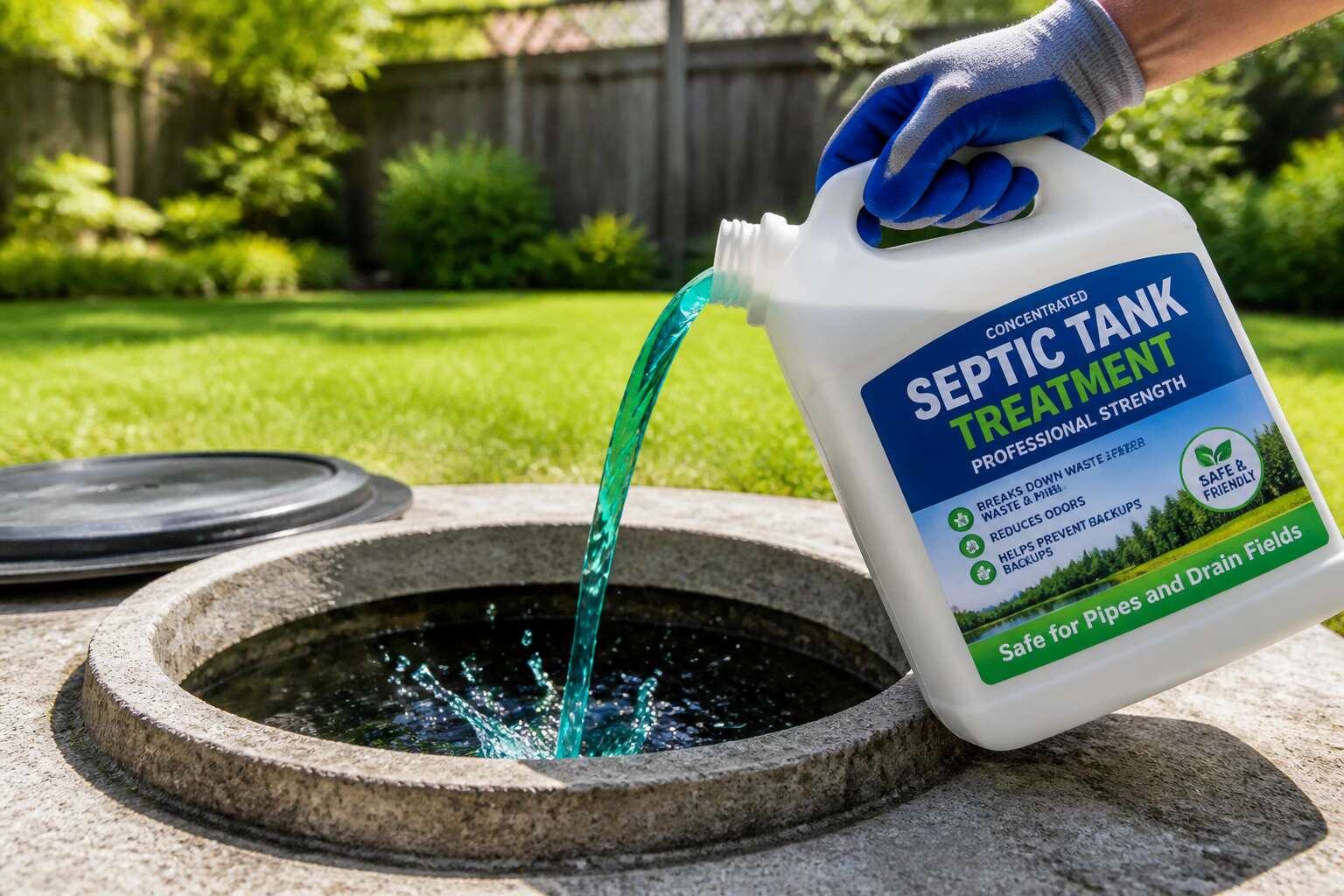
– Pour the recommended dose directly into the toilet, never down a sink drain.
– Flush once to move the solution into the main tank line.
– Wait two to three hours before running heavy appliances like washing machines.
Always read the label twice to ensure the formula lists live bacteria or enzymes. Avoid products with chemical solvents or strong acids, as these can corrode pipes. When in doubt, remember that plain water is often the only safe additive. Prioritizing safety with septic tank cleaning chemicals means understanding that less intervention usually leads to a longer lifespan for your drainage field.
Signs Your Tank Needs Pumping Over Chemicals
The Hidden World Beneath Your Lawn
Most homeowners never think about the complex ecosystem working silently below their grass. Your septic system processes every flush, every shower, and every laundry load through a delicate biological balance. The average South African household generates roughly 300 litres of wastewater daily, and all of it passes through this underground network. Understanding how septic tank cleaning chemicals support this environment matters more than you might expect.
Safe Usage
The secret to a healthy septic system is moderation. Gentle, enzyme-based products break down organic waste without disturbing the beneficial bacteria colony that does the heavy lifting. These natural solutions digest toilet paper, grease, and food particles while leaving the biological balance intact. Harsh alternatives containing caustic soda or hydrochloric acid might seem effective initially, but they sterilise the tank and stop the decomposition process altogether. Always read the label and follow dosage instructions precisely, as pouring extra product into the system never speeds up the process.
Signs Your Tank Needs Pumping
Septic tank cleaning chemicals maintain your system between professional services, but they cannot replace the physical removal of accumulated sludge. Watch for slow-draining sinks, gurgling sounds in the plumbing, or an unexpected lush patch of grass over the drainage area. These indicators suggest the tank has reached capacity and requires a professional pump-out. Regular maintenance every three to five years prevents costly repairs and protects the surrounding environment.
Frequency
Monthly treatments of quality septic tank cleaning chemicals keep your system operating efficiently. This schedule maintains the bacterial population at optimal levels without overloading the tank with unnecessary additives. Seasonal changes affect bacterial activity, so you might increase applications during summer when water usage peaks. Conversely, a property used only on weekends may require less frequent treatment, but it still needs attention to prevent the bacterial colony from starving.
Application Tips
Pour the recommended amount directly into the toilet and flush, allowing the solution to travel through the pipes naturally. Avoid adding products through sinks or showers, as the chemical may damage plumbing traps or fail to reach the tank in sufficient concentration. Wait several hours before running heavy appliances to give the enzymes time to work. Spread your water usage throughout the week rather than concentrating laundry and bathing into a single day, as this helps maintain consistent flow through the system.
Common Application Mistakes That Ruin the System
Let’s talk about how homeowners destroy their underground ecosystem with well-intentioned products. The leading killer of bacterial colonies is overdosing on septic tank cleaning chemicals. Pouring in triple the recommended amount does not accelerate decomposition. It sterilises the tank and stops the organisms from working.
- Dosing through the kitchen sink, which corrodes traps
- Flushing products during heavy storms, so they wash straight through
- Waiting six months, then panic-dosing a whole bottle
Frequency should track water usage. A full holiday house in Durban needs monthly enzymes. An empty weekend cottage needs less, but never zero. Starvation kills bacteria just as surely as poison does.
Application looks simple, yet people still pour chemicals into basins. Flush them down the toilet instead, then wait. Let the septic tank cleaning chemicals travel through the pipes unhurried. That is the entire trick, and most people fail it.
Safety Precautions When Handling Harsh Chemicals
One splash of caustic septic tank cleaning chemicals can burn skin or cause blindness. I have seen too many homeowners skip the gloves, and the results are painful. Treat every bottle as a hazard. Wear thick rubber gloves and safety goggles. Open containers in a well ventilated area. Never mix different products, since toxic fumes may form!
Frequency depends on water usage, not a fixed schedule. Storage matters too. Keep bottles locked away from children and pets. Store them upright in a cool, dry place. If a spill occurs, dilute it with water and clean up immediately.
- Wear gloves and goggles for every dose
- Never transfer chemicals to food containers
- Check the expiry date before pouring
Pour the measured amount into the toilet bowl and flush once. Then wait. Do not add extra product to speed things up. The bacterial colony needs time to work. Septic tank cleaning chemicals function best when you follow the label exactly and leave the system alone.
Alternatives, Professional Help, and Maintenance Strategies
Natural DIY Alternatives: Vinegar, Baking Soda, and More
The American Dream often arrives cloaked in the quiet hum of a home’s essential systems, a promise of self-sufficiency that is both proud and precarious. For many homeowners, the allure of a quick fix from a bottle is tempting, but the true art of stewardship lies in understanding the landscape beneath our feet. While commercial septic tank cleaning chemicals have their place, a gentler, more considered path often yields the most enduring results. The communal bacteria within your tank are a living workforce, and treating them with respect is the first rule of sustainable home management.
Natural DIY alternatives, such as vinegar and baking soda, offer a graceful way to maintain equilibrium without introducing harsh agents. These common household staples can help manage odours and maintain a healthy pH balance, acting as a gentle tonic rather than a disruptive purge. For routine upkeep, consider a simple approach.
– Use a cup of baking soda flushed down the toilet monthly to gently scrub the system’s internal surfaces.
– Pour a solution of vinegar and water down the drains to break down minor organic residue without harming the bacterial culture.
– Avoid introducing chemical drain cleaners, as they often kill the very organisms responsible for waste decomposition.
These practices support the system quietly, yet they are not a substitute for the definitive care that only a professional can provide. There comes a time when the expertise of a licensed technician becomes an act of profound necessity, not an admission of failure. These specialists perform the physical pumping and inspection that no additive can replicate, identifying structural issues like a compromised drain field or a failing baffle long before they become catastrophic. Their role is not merely reactive; it is diagnostic. The insights they provide into your specific soil conditions and water table are invaluable, transforming a standard maintenance call into a tailored strategy for longevity.
Ultimately, the most effective maintenance strategy is a holistic one that treats the tank as a living ecosystem rather than a simple receptacle. It involves monitoring your water usage, staggering laundry loads, and being mindful of what enters the drain. We must see the system not as a place to discard problems, but as a vessel that requires our daily intention. The question of whether to use septic tank cleaning chemicals becomes secondary to a larger, more profound inquiry about the health of the entire system. When you engage with the underground world thoughtfully, you are not just preserving a piece of infrastructure; you are upholding the quiet dignity of a home that works in harmony with the land it stands upon.
When to Call a Septic Professional Instead
Some homeowners assume septic tank cleaning chemicals are a substitute for hands-on maintenance. That assumption leads to costly repairs. I have learned a gentle approach works better. For routine care, natural alternatives like hot water rinses or enzymatic treatments keep bacteria thriving without killing the colony.
Knowing when to call a septic professional instead of reaching for a bottle is important. If drains gurgle or wastewater backs up, chemicals will not fix a blocked drain field. A technician can pump the tank and inspect baffles. That is a critical moment!
Maintenance strategies go beyond chemicals. I track water usage and stagger laundry loads. Watch for these signs:
- Slow draining sinks
- Foul odours near the tank
- Lush green patches over the drain field
Environmental Impact and Local Septic Regulations
There is a persistent fiction about septic tank cleaning chemicals. Many think a concentrated dose will rescue a failing system. The reality is more grounded. A healthy septic system relies on biological activity. Constant chemical bombardment disrupts that balance.
Alternatives to harsh bottles do exist. Enzymatic treatments are the logical default. They are digestion tools, not killers. Regular maintenance, however, is the strongest strategy. A professional opinion remains the gold standard.
– Monitor your tank’s sludge level annually
– Track your water usage on the homestead
– Map your drain field size and boundaries
Professional help is paramount when soil absorption fails. A plumber can diagnose leach field saturation with certainty. Chemicals will not restore soil porosity. They only add mystery compounds to the groundwater. Local regulations in South Africa often dictate disposal and waste water standards. Ignoring these specific bylaws invites legal trouble. Maintaining your system is protection. It preserves your property value and the environment. Septic tank cleaning chemicals play a role, but only as a minor actor in a larger production of sound practice.
Cost Analysis: Routine Chemicals vs. Pumping Services
Routine chemicals promise liberation from the muck, but the ledger tells a different story. A bottle of septic tank cleaning chemicals costs less than a professional pump out, yet repeated applications accumulate into a phantom expense. Pumping services offer certainty. You pay for the removal of what ails the system, not a temporary masking of symptoms.
Alternatives exist. Enzyme treatments work slowly, digesting organic matter without the violent reaction of caustic agents. They are not a cure for a failing drain field, but they support the biological quietude that keeps a tank functional.
Professional help remains the benchmark. When the leach field saturates and the soil refuses to absorb, no additive will restore porosity. A licensed plumber can measure sludge levels and diagnose the damage.
- Annual sludge inspection
- Water usage tracking
- Drain field boundary mapping
The cost analysis favours the pump. Chemicals treat symptoms; pumping treats the source. Septic tank cleaning chemicals serve a minor role next to professional attendance.
How to Maintain a Healthy Bacterial Ecosystem
Alternatives to harsh additives are gaining ground among South African homeowners. Enzyme treatments foster a healthy bacterial ecosystem by digesting organic matter gradually. They do not shock the system like caustic agents. For those who prefer natural methods, regular water usage and simple vigilance often outperform any bottle of septic tank cleaning chemicals.
Professional help remains the gold standard. A licensed plumber can measure sludge levels and identify failing drain fields before they become disasters. Combine their expertise with these maintenance strategies:
- Annual sludge inspection
- Water usage tracking
- Drain field boundary mapping
Septic tank cleaning chemicals play a supporting role at best. They assist the bacterial colony but never replace the physical removal of solids. Even when used correctly, septic tank cleaning chemicals cannot mend a saturated drain field. The health of your tank depends on quiet, consistent care, not on a single product application.
Long-Term Prevention: Habits That Extend Tank Life
The real enemy of a septic system is the unseen layer of non-biodegradable sludge that settles at the bottom of the tank. While enzymes and bacteria work diligently, they are not equipped to break down the persistent grit that accumulates year after year. This is why the hum of a professional pump truck’s engine is often the sweetest sound a homeowner can hear)Skip this draft.
Alternatives to chemical cocktails often lie in the frequency of your own household habits. Excess water flushes the tank too quickly, depriving the bacterial colony of time to work. Conversely, a dry tank can cause solids to harden into a concrete-like state. Moderation is the key, allowing the primary breakdown to occur naturally, reducing the need for septic tank cleaning chemicals altogether.
Professional Help is the definitive diagnostic tool that no product can replicate. A trained technician does not just pump out the sludge; they assess the biological health of the scum layer and check for early signs of root intrusion. They use pressure testing to find leaks in the drain field that far exceed the reach of any additive. Their expertise ensures that your reliance on septic tank cleaning chemicals remains minimal and strategic, rather than a panacea.
Long-Term Prevention depends on protecting the drain field boundary, which is a finite resource.
– Map out the buried leach lines to avoid accidental crushing by vehicles.
– Divert roof water and runoff away from the drainage area to prevent oversaturation.
– Plan landscaping with shallow-rooted plants to avoid blocking the pipes.
These habits support the bacterial ecosystem and ensure that routine maintenance remains straightforward. The narrative of septic upkeep is one of diligence over discharge. Homeowners who track their water consumption and schedule diligent inspections find that bottles of septic tank cleaning chemicals are rarely the deciding factor in the system’s longevity.


0 Comments